In shortAngkor Thom is the walled city north of Angkor Wat, reached by causeways over the moat and through gate towers carved with faces, with the Bayon and its face towers at the centre. The Bayon and the Baphuon both open at 7:30 AM and close at 5:30 PM, which rules out dawn here: start at Angkor Wat when it opens at 5:00 AM, then drive north.
7:30 AMBayon and Baphuon open
5:30 PMBoth close
51 yearsBaphuon restoration work
17 kmSmall circuit loop
Angkor Thom and the Bayon as a single visit
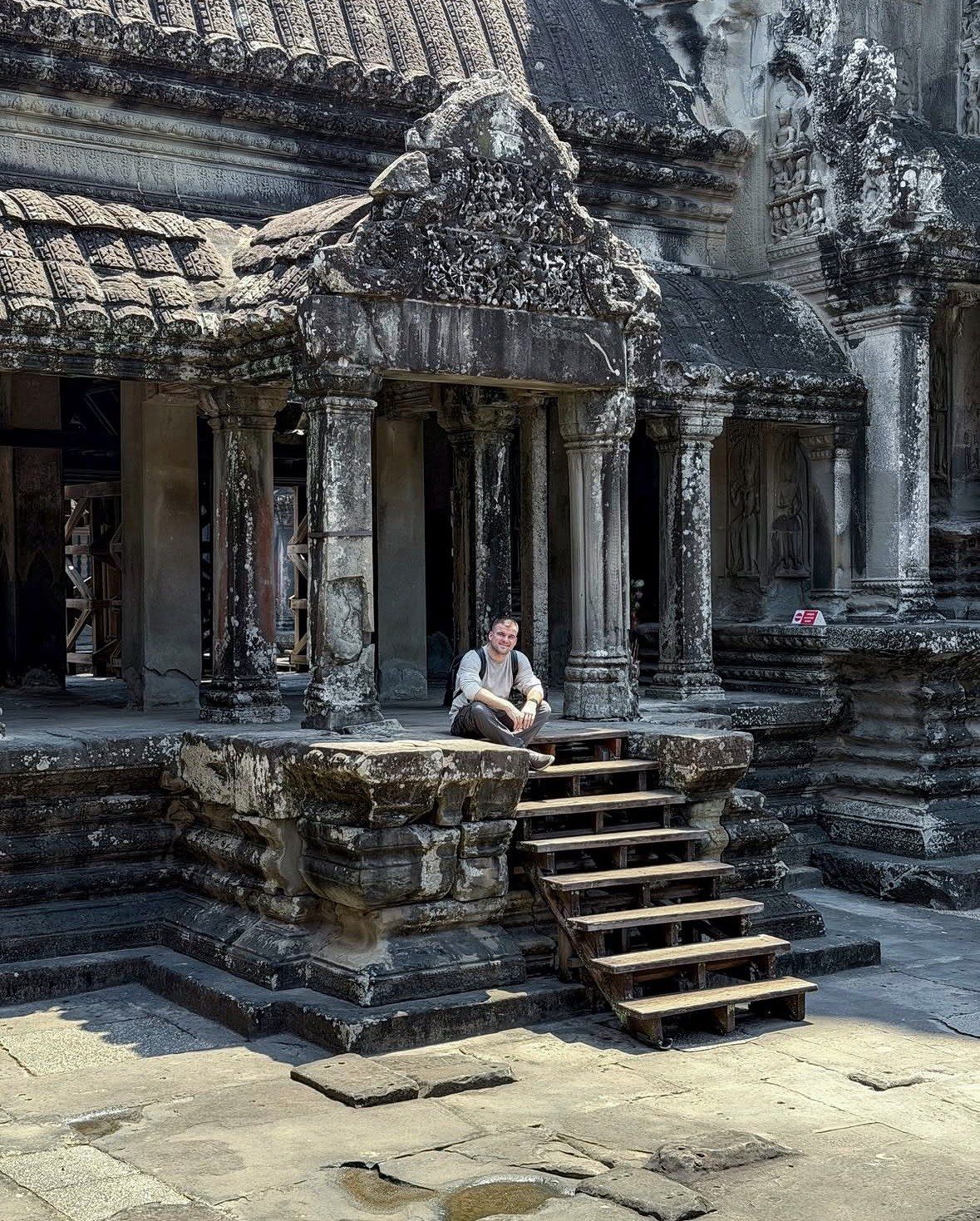
Angkor Thom is a city inside walls and a moat, holding several monuments. The Bayon stands at the centre, the Baphuon lies to its north-west, the long royal terraces face the open square, and behind them sits the enclosure where the palace once stood. Treat the whole thing as one stop. Once your driver has parked, the gates, the face temple, the pyramid and the terraces are all within walking distance of each other.
The hours tie this stop to Angkor Wat. Nothing inside these walls lets anyone in before 7:30 AM, the shared opening time of the Bayon and the Baphuon, whereas Angkor Wat has been admitting visitors since 5:00 AM, when it opens for sunrise. That gap is the whole reason the classic morning runs Angkor Wat first and the walled city second.
They also share a loop. Angkor Thom closes out the small circuit, a run of about 17 km (10.5 miles) that leaves Angkor Wat for Srah Srang, turns west past Ta Prohm and Ta Keo, and crosses into the city through the Victory Gate on the eastern side. The grand circuit covers about 25 km (15.6 miles), adding Pre Rup, East Mebon, Neak Pean and Preah Khan, and it comes back through the north gate straight to the Bayon.
Angkor Wat at dawn, then the walled city
Eight hours from $18, with an English tour guide and an air-conditioned vehicle, follows the order the opening times dictate: Angkor Wat from 5:00 AM, the gates while the city is still shut, then the Bayon at 7:30 AM.
★ 5.0/5 · 13,742 reviews
The south gate and the other causeways over the moat
The south gate is the one you meet coming up the road from Angkor Wat, and most mornings in the park pass through it. The causeway over the moat is lined with carved stone figures along its parapets, and the tower above carries the same faces you will meet again at the centre of the city. Ask your driver to stop before you go through rather than after, because the view runs along the causeway from the outside.
The gates are open structures on the park road, so they follow the park's own hours: entry from 5:00 AM, closing at 6:30 PM, according to the official pass information. That makes them the one part of Angkor Thom you can see before 7:30 AM, which is worth knowing if sunrise at Angkor Wat finishes early and you have an hour to fill.
Which gate you use depends on your loop. Coming direct from Angkor Wat, it is the south gate. On the small circuit you arrive from the east through the Victory Gate, and on the grand circuit you come down from Preah Khan and enter by the north gate. Every causeway crosses the same moat, so none of them is a detour you have to engineer.
The Bayon and its towers of carved faces
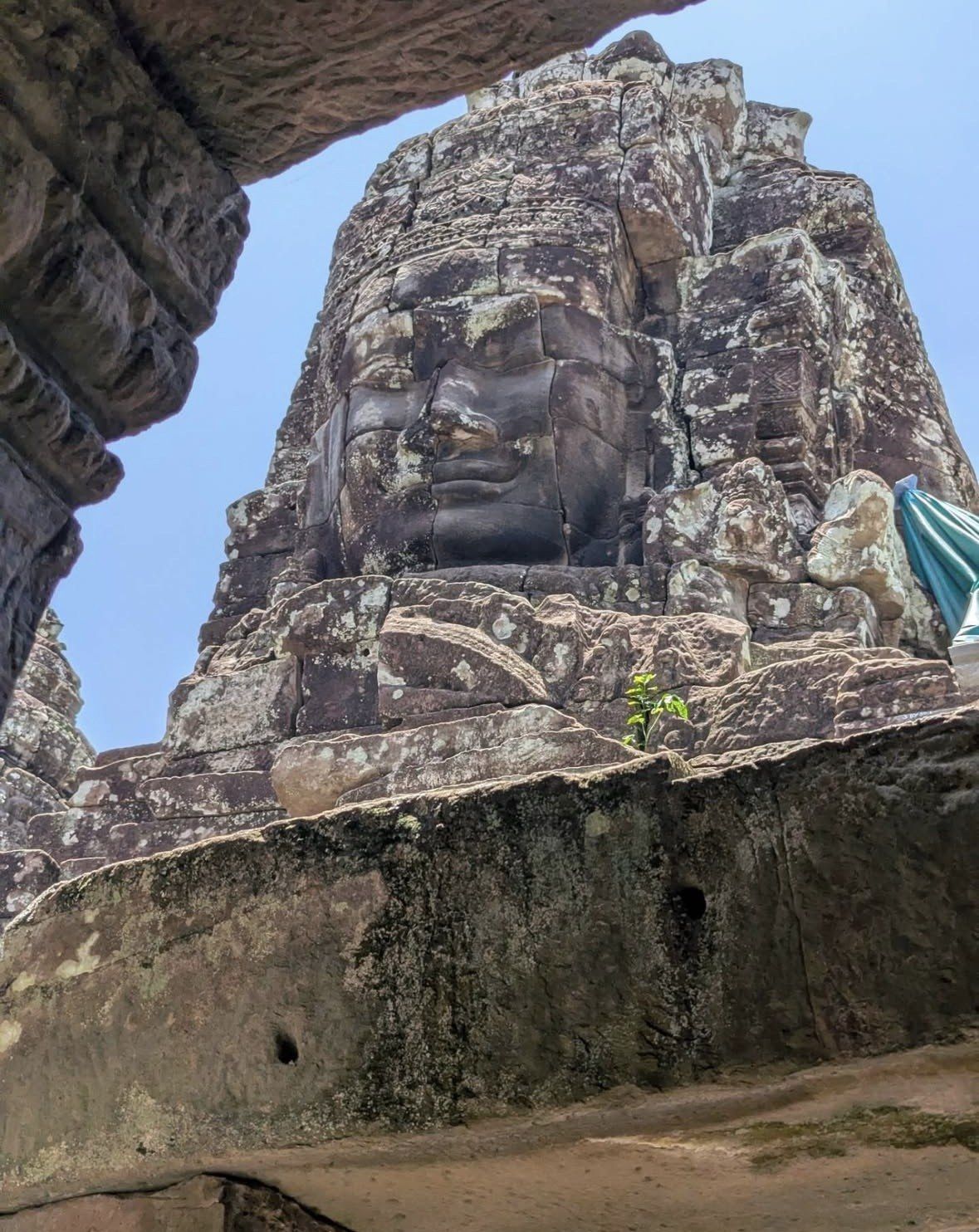
The Bayon stands at the exact middle of the walled city and served as the official state temple of the Mahayana Buddhist king Jayavarman VII, built in the late 12th or early 13th century. Its upper level is a cluster of towers, each carrying carved faces turned to the compass points, and those faces are the reason the climb in the heat earns its place in the morning.
Entry to the face temple runs from 7:30 AM until 5:30 PM. Be there for the opening if you can. The first half hour gives you the lowest sun on the faces and the fewest people on the narrow upper terrace, where two-way traffic slows everything down. Work up through the galleries instead of heading straight to the top, then come down the far side.
The code of conduct applies here as everywhere in the park, and the Bayon is a working religious site. Do not touch the carvings or lean on the stonework, keep off loose stones, respect the posted signage in restricted areas, and ask permission before photographing monks. Leave backpacks, tripods, sharp-tipped umbrellas and high heels behind, since the code discourages all of them inside the temples and the Bayon's narrow upper stairs are the worst place to be carrying any of them. Smoking has been banned across the site since 2012.
The Baphuon, the square and the royal terraces
A short walk north-west of the Bayon stands the Baphuon, the mid-11th-century state temple of Udayadityavarman II. It reopened after a stone-by-stone restoration that ran for 51 years and finished in April 2011, which is why its long raised walkway and tiered flanks read as sharper and more complete than most of what you see in the park. Official hours match the Bayon: 7:30 AM to 5:30 PM.
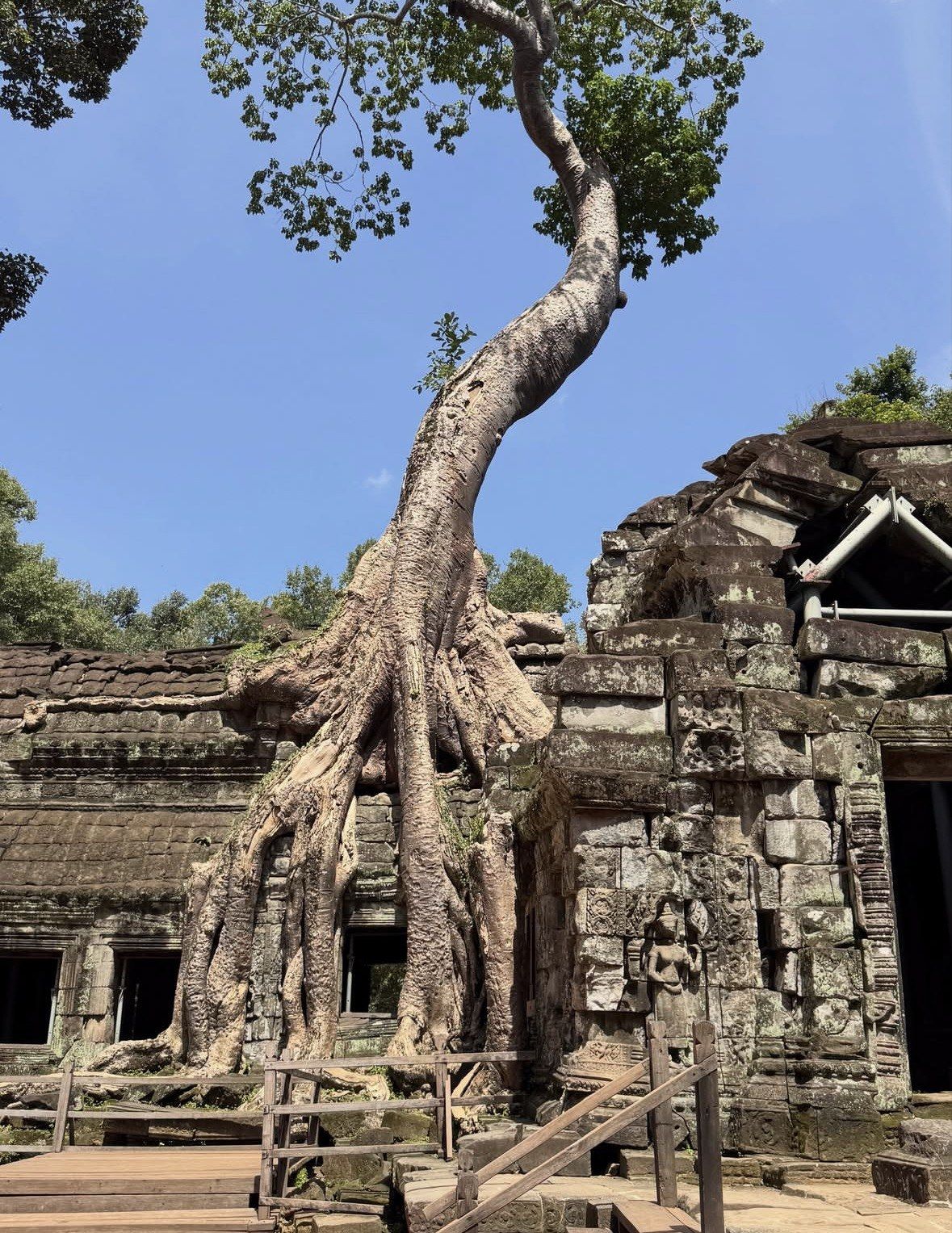
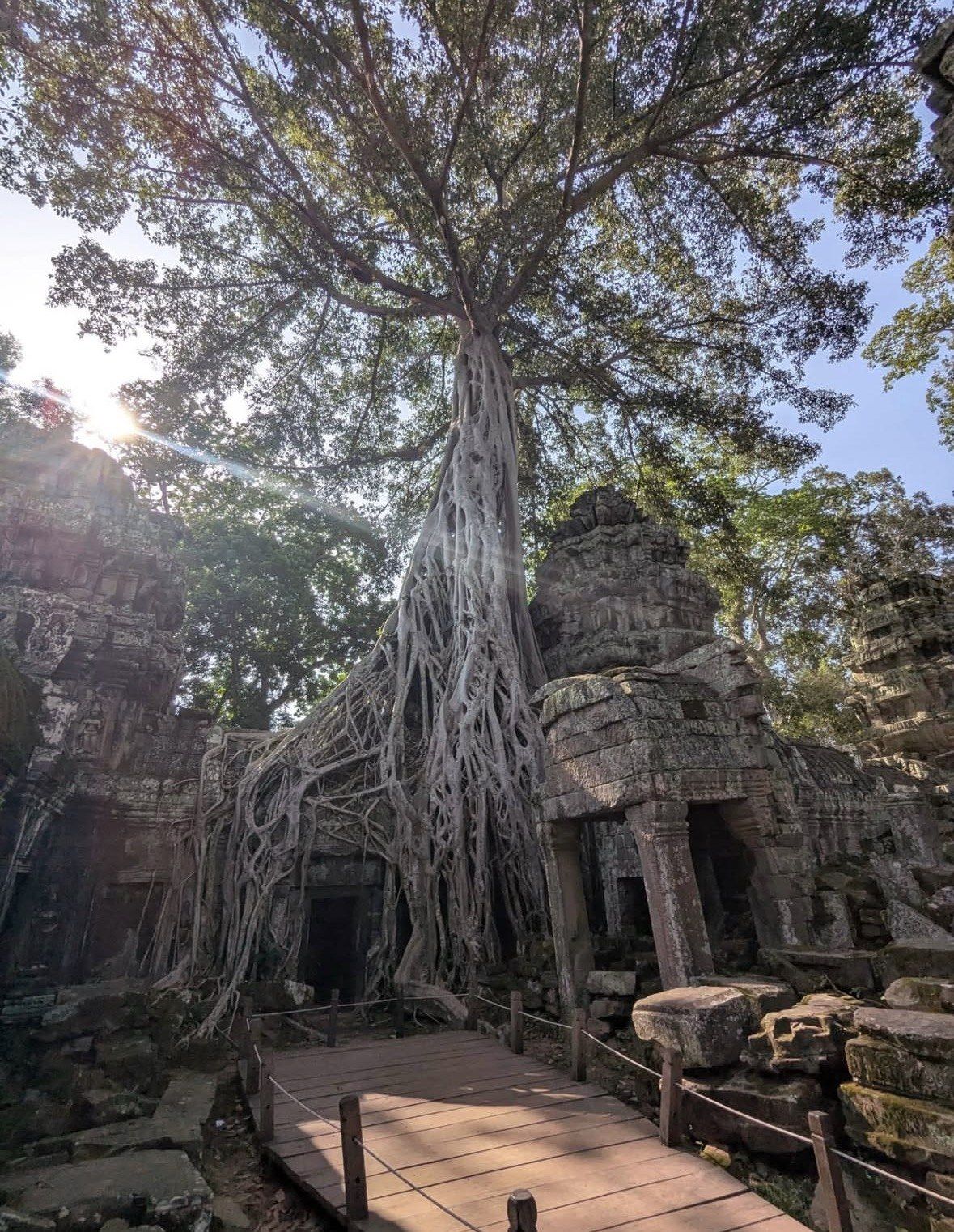
The terraces run along the eastern side of the royal square, a few minutes on foot from the Baphuon. The Terrace of the Elephants is the long carved platform facing the open ground, and the smaller, more densely carved Terrace of the Leper King sits beside it. Behind them lies the royal enclosure, with the remains of the temple that served the palace; the palace buildings themselves were wood and have gone.
The official site publishes separate opening times only for a handful of named monuments, and the terraces are not among them, so plan them inside the park's own 5:00 AM to 6:30 PM window and check on the day in case a ceremony or restoration work closes something off. Walking the terraces, the square and the Baphuon walkway is the flattest part of this stop, which makes it the natural place to finish before the midday heat.
How long it takes and where it fits in the day
Build the morning around two fixed times. From the causeway at Angkor Wat at 5:00 AM you get sunrise and the galleries, then the drive north, then the gate. The Bayon lets nobody in before 7:30 AM, so the gates and the walls are what you use in between. From the opening of the Bayon through the Baphuon and the terraces, expect to be on your feet until late morning, which is when most guided days break for lunch.
If a dawn start does not suit you, turn the day around. The Bayon and the Baphuon lock up at 5:30 PM, the same closing time as Angkor Wat, but the park itself keeps running to 6:30 PM, Preah Khan stays open to 6:30 PM as well, and Phnom Bakheng, about 1.5 km from Angkor Wat, is listed to 7:00 PM, though you should plan to be down by the park's 6:30 PM closing. An afternoon inside Angkor Thom followed by one of those two works well, and the park is quieter than its reputation suggests: 510,528 foreign visitors came between January and September 2026, a 27.6% fall year on year.
Shoulders and knees stay covered from the moment you leave your hotel. Checkpoint staff scan your pass at every monument, this one included, and foreign-office advice says plainly that clothing judged too revealing is grounds for being refused entry at religious sites, Angkor Wat among them. Going back to change is not realistic once you are well north of town.
| Monument or area | Opens | Closes |
|---|
| Angkor Temples Park (gates, causeways, roads) | 5:00 AM | 6:30 PM |
|---|
| Angkor Wat | 5:00 AM | 5:30 PM |
|---|
| Bayon | 7:30 AM | 5:30 PM |
|---|
| Baphuon | 7:30 AM | 5:30 PM |
|---|
| Ta Prohm | 7:30 AM | 5:30 PM |
|---|
| Preah Khan | 7:00 AM | 6:30 PM |
|---|
| Phnom Bakheng | 5:00 AM | 7:00 PM listed; plan to be down by 6:30 PM |
|---|
Choosing a tour that covers the walled city
Every guided day on this site covers the same geography, so choose on pace and transport rather than on the temple list. The sequencing is the part worth paying for: a guide who does this daily has you at Angkor Wat for 5:00 AM and standing at the Bayon as it opens at 7:30 AM, instead of waiting at a closed gate.
A pass is required for all of them and is charged separately. Your guide can obtain it for you, and that route counts as one of the five official channels; the others are the website, the official app, a kiosk and a staffed counter.
- Widest choice on a first visit: the Angkor Wat Sunrise or Sunset Tour with Guide from Siem Reap runs 8 hours from $18, rated 5.0 ★ (13,742 reviews), with an English tour guide, an air-conditioned vehicle for the drive north into the walled city, cold water and a cold towel. Dawn or late afternoon is your call when you book. The park pass is not included.
- Less time, no rush: the Angkor Wat Private Day Tour from Siem Reap covers 6-7 hours from $49, rated 5.0 ★ (1,052 reviews), and includes hotel pickup and drop-off, an experienced English-speaking guide, cold bottled water, and a tuk-tuk for 1-3 passengers or a minivan from 4 upwards. The park pass is not included.
- The loop under your own power: the Angkor sunrise bike, e-bike or tuk-tuk tour, 9 hours from $60, 5.0 ★ (638 reviews), with a trek mountain bike and helmet, an e-bike when that option is booked, an English-speaking cycle guide, a support vehicle, hotel pick-up and drop-off, breakfast and lunch, bottled water and snacks. The temple entrance fee is not included.
Questions people ask
Can you watch the sunrise at Angkor Thom?
No. The Bayon and the Baphuon stay shut until 7:30 AM, so the place to be at first light is Angkor Wat, open from 5:00 AM. The gates and causeways of the walled city sit on the park road and are usable from the 5:00 AM park opening, but they face the wrong way for a dawn shot. For a different place to stand at first light, Srah Srang opens at 5:00 AM and Pre Rup at 6:00 AM, both inside the park.
Do I need a separate ticket for Angkor Thom and the Bayon?
No separate ticket is needed. The Angkor Temples Park pass covers more than 50 accessible temples inside the park, the Bayon and the Baphuon among them. Staff scan and verify the pass at each temple checkpoint before letting you in, so keep it with you all day. On a guided day the guide can arrange the pass, which is one of the five official channels, with the website, the app, a kiosk and a staffed counter making up the rest.
Why does the Baphuon look so different from the other temples?
Because it was taken apart and put back together. The mid-11th-century state temple of Udayadityavarman II reopened after a stone-by-stone restoration that ran for 51 years and finished in April 2011. That is why its walkway and terraces read as a finished structure rather than a collapse, and it is the clearest example in Angkor Thom of what full reconstruction produces.
Which gate should the driver use coming from Angkor Wat?
The south gate, which sits directly on the road north from Angkor Wat. Ask to stop outside the moat before you drive through, because the carved figures along the causeway and the faces on the tower are best seen from the approach. On the small circuit you come in from the east through the Victory Gate instead, and the grand circuit returns from Preah Khan through the north gate.
Is Angkor Thom worth a second visit later in the day?
It works well in the afternoon if you would rather not set a second pre-dawn alarm. The Bayon and the Baphuon stay open to 5:30 PM, and after that Preah Khan runs to 6:30 PM and Phnom Bakheng is listed to 7:00 PM, so a late pairing is realistic. Plan to be down from Phnom Bakheng by the park's 6:30 PM closing, and night driving between sites is best avoided, so keep the return to town inside daylight.
Read also