In shortGo between November and April. The months to leave out run June to October, the monsoon in official UK travel advice, which flags storm damage to roads, landslides and flash flooding. The dry months make driving between temples easier and suit the 5:00 AM start at Angkor Wat, which opens earlier than any other monument. Pick your month by first light as well, since dawn lands at about 05:39 at the June solstice and as late as about 06:31 in mid-January.
June to Octobermonsoon months
06:31latest sunrise, mid-January
510,528visitors January-September 2026
5:00 AMAngkor Wat opening
The season to aim for
Aim for November to April. Official UK travel advice sets Cambodia's monsoon at June to October, with storms that damage roads, cause landslides and bring flash flooding, which makes the dry half of the year the easier time to move around the park. A temple day is mostly road time, and that is what the season decides for you: 6 km from Siem Reap town centre up to Angkor Wat, about 17 km (10.5 miles) round the small circuit, about 25 km (15.6 miles) round the grand one, and another 25 km north-east of the main group if Banteay Srei is on the list.
Heat rather than rain is what the dry months ask of you. The park admits visitors from 5:00 AM and closes at 6:30 PM, and in the hot, still weeks before the rains the day works best split in two: stone from first light until mid-morning, shade in the middle of the day, then back out from about four o'clock. Plan that second half around 5:30 PM, when Angkor Wat stops letting you in, a full hour ahead of the park's own closing.
Humidity is the other half of the picture. Once the monsoon sets in, the air in the open galleries stays heavy even on a dry morning, and the walk along the 350 m western causeway and up through the enclosures feels longer than its distance. Cold water and a cold towel in the vehicle stop being a nicety on those days.
Best time to visit Angkor Wat, month by month
The year falls into four working blocks for a temple trip, and each one changes what you see as well as how comfortable you are.
- November to February: the driest stretch and the easiest for the long drives out to Banteay Srei or Beng Mealea. Sunrise is at its latest in mid-January, around 06:31, so a 5:00 AM arrival on the causeway means a long wait in the dark. Tonle Sap is already receding, so the lake villages look their least flooded.
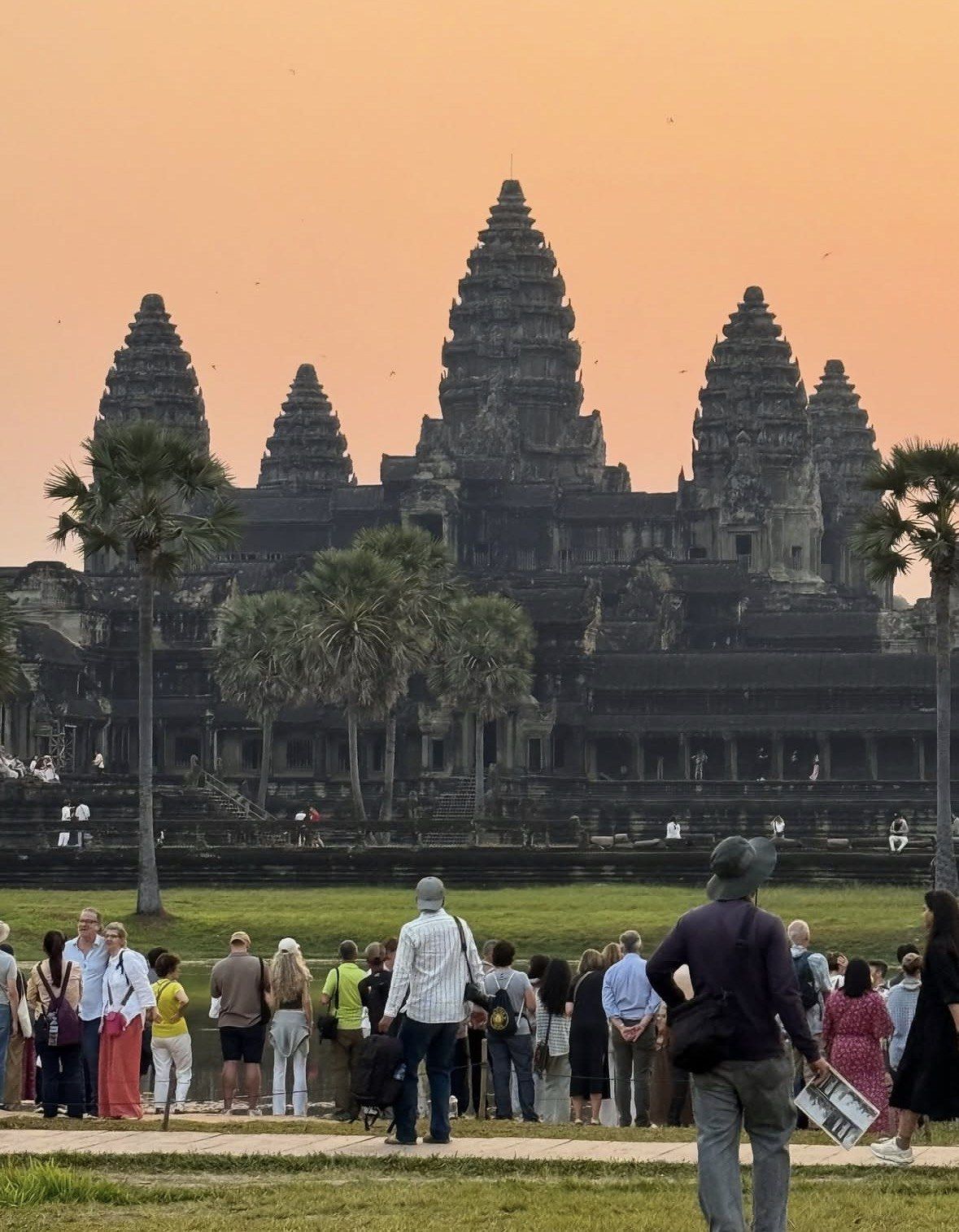
- March to May: the sun lines up with Angkor Wat's central tower seen from the western causeway at the spring equinox, when sunrise is about 06:08 and sunset about 18:15. Heat builds through this block, the moat and the ponds are at their lowest, and the jungle around Ta Prohm is at its driest.
- June to August: monsoon months in official advice, with road damage, landslides and flash flooding the practical risk. Days are at their longest: sunrise about 05:39 and sunset about 18:34 at the June solstice. Water is high on Tonle Sap from May, and the green around the tree temples is at its heaviest.
- September to October: still inside the monsoon window, with the Tonle Sap inflow reversal ending in late September. The moat and the restored northern reflecting pond are full, the equinox alignment returns, and an afternoon can disappear to a storm, so the dates need slack in them.
| Time of year | Sunrise at Angkor | Sunset at Angkor |
|---|
| March equinox | about 06:08 | about 18:15 |
|---|
| June solstice | about 05:39 | about 18:34 |
|---|
| December solstice | about 06:22 | about 17:43 |
|---|
Dawn or late afternoon, chosen to suit the season
Eight hours from Siem Reap with an English tour guide and an air-conditioned vehicle, and you pick which end of the day the tour runs, which is the decision the season really makes for you.
★ 5.0/5 · 13,742 reviews
Angkor Wat rainy season: what changes on the ground
From June to October the constraint is the road rather than the monument. Official advice describes storm damage to roads, landslides and flash flooding in those months, and that hits the long runs hardest: Banteay Srei at about 35 km by road from Siem Reap, plus Koh Ker, Beng Mealea and Kbal Spean, whose gates open from 6:00 AM instead of 5:00 AM and which need a full outbound drive. In those weeks that means keeping to main routes and marked paths out in the rural temple areas, and being back before dark rather than driving between sites at night.
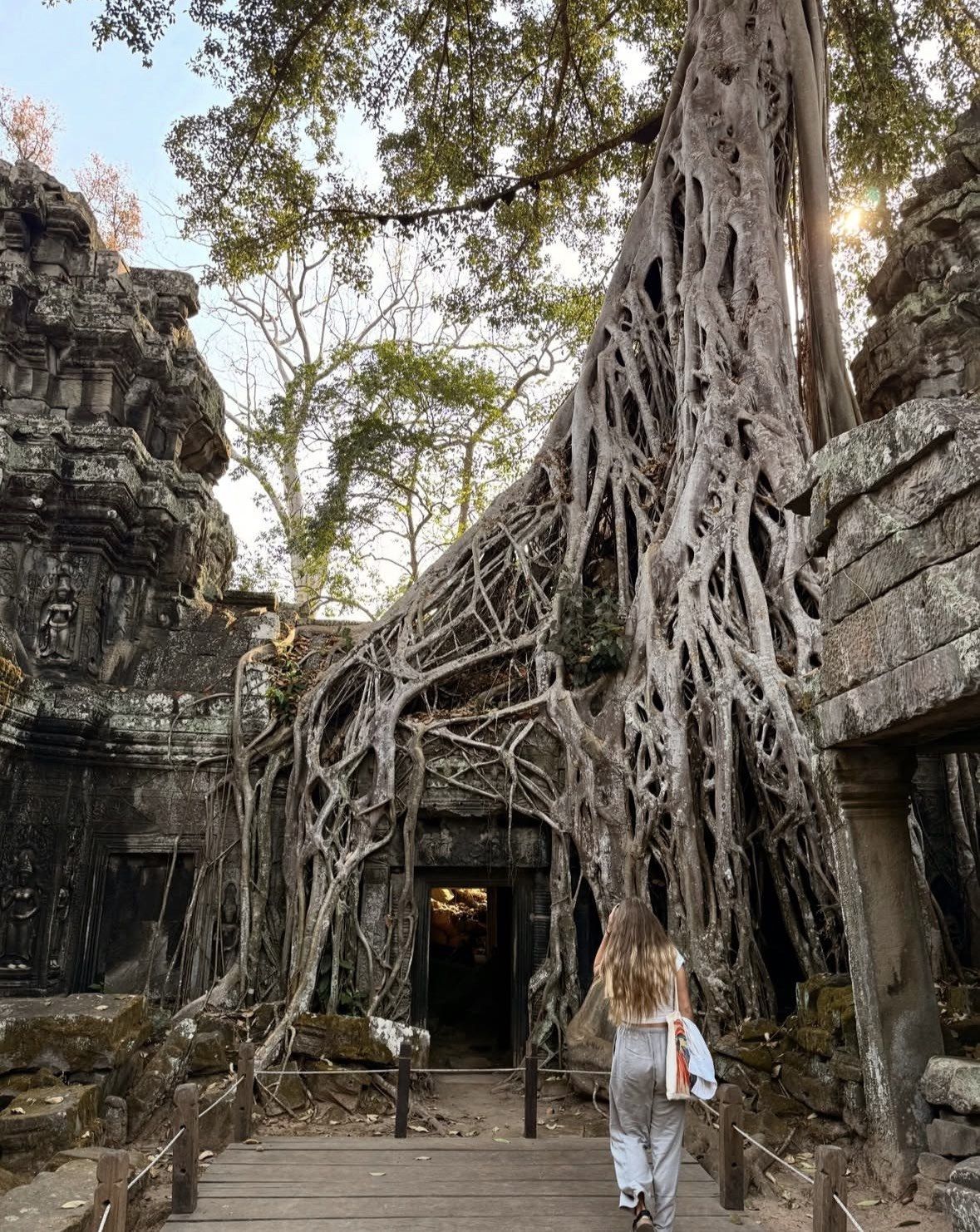
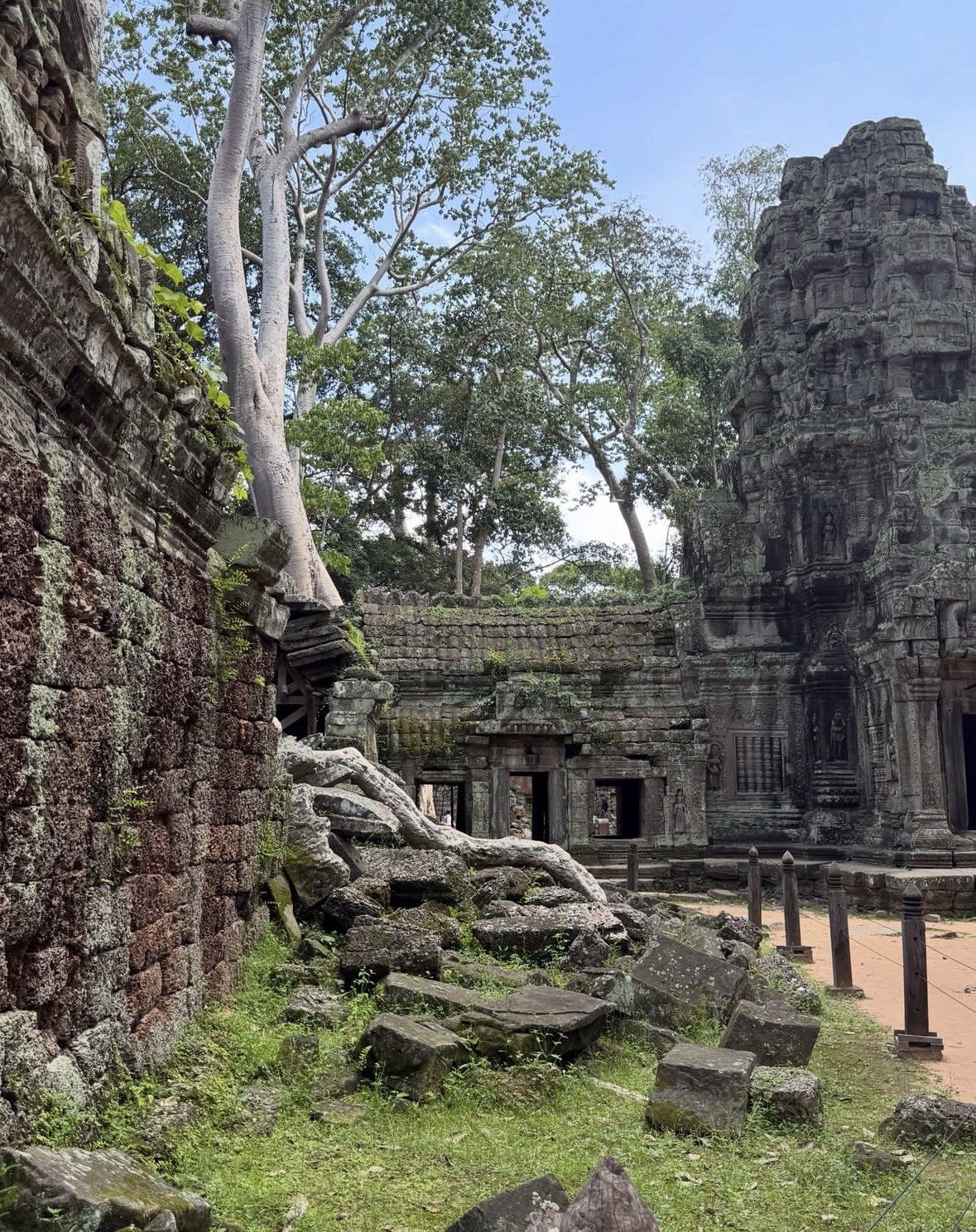
The stone looks better wet. Rain fills the water: a moat about 190 m wide with a perimeter of over 5 km, and the pair of ponds either side of the 350 m causeway, in front of the third set of steps beside the outer libraries, which is where the reflection shot comes from. Of those, the northern pond has held water since its restoration in 2020; the four inside the cruciform cloister are dry whatever the month. Around Ta Prohm the silk-cotton and thitpok trees are at their fullest in the wet months, which is the look the temple is known for.
Build slack into the dates if you travel in those months. The three-day pass expires in 7 days according to the official site, and in the rainy season that window is your weather insurance: the three visit days can sit anywhere inside the week, so a storm-ruined afternoon costs you nothing. A pass bought after 5:00 PM counts for the following day, which is how a dawn start gets arranged the evening before instead of in the dark.
How busy the park has been in 2026
Angkor has been quieter than its reputation. The park received 510,528 foreign visitors from January to September 2026, a fall of 27.6% year on year, generating $24.23 million in ticket revenue; over the first eight months, 474,993 tickets were sold to foreign visitors, down 29.07%. The old advice written for multi-million-visitor years overstates what you will actually find on the causeway.
Monthly arrival figures are not published, so plan around the opening hours instead of a crowd calendar. Pressure concentrates where the hours funnel everyone to the same place: Angkor Wat opens at 5:00 AM for sunrise (Srah Srang and Phnom Bakheng also admit visitors from 5:00 AM), which puts most sunrises on one causeway, and Phnom Bakheng, about 1.5 km away and listed to 7:00 PM (plan to be down by the park's 6:30 PM closing), is the classic sunset hill over the temple. Its summit is widely reported to be capped at 300 visitors at a time, so go up early for dusk and check the arrangement on the day.
If the causeway looks packed, dawn can be taken elsewhere: Srah Srang opens at the same 5:00 AM hour and Pre Rup from 6:00 AM. Angkor Wat's upper level, the Bakan, opens later than the temple at about 6:40 AM by the wooden stairway on the eastern side, with access limited to groups of 100 at a time for visits of 15 to 30 minutes and modest dress required; on the four Buddhist holy days each month it is open only to Cambodian visitors for worship. The late afternoon is the thinnest part of the day, and Preah Khan stays open to 6:30 PM after Angkor Wat has closed.
Lake trips and the balloon follow the water
Tonle Sap runs on its own calendar. The lake's open water covers about 2,500-3,000 km2 at a maximum dry-season depth of 3.6 m, then spreads to roughly 13,000 km2 and more than 10 m deep at the wet-season peak, with the reversal of flow into the lake ending in late September.
Kampong Phluk divides the year the other way round from the temples: May to October brings the high water that makes the stilt houses look afloat, and from November to April the level drops and the pier moves closer to the lake. At Kompong Khleang, where stilted houses stand up to 10 m high, boats cannot reach the main villages in the dry season, while wet-season floodwater climbs one to two metres up the buildings. The official boat page advises that sunset cruises should ideally leave between 16:30 and 17:15, so a lake afternoon and a temple sunset compete for the same hours.
The Angkor Balloon near Angkor Wat is a tethered helium balloon, not a free-flying one, rising to about 120 m for a ride of 10 to 15 minutes, and it needs no temple pass. Afternoon flights are suggested from November to April and morning flights from May to October, the same seasonal split the temples work to. On clear days the view takes in Angkor Wat, Phnom Bakheng, the West Baray and Tonle Sap.
Current conditions, then the shape of your day
Set the dates first, then the hour, then the tour format. Use the current conditions panel on this page the evening before a temple day: it tells you whether to commit to the causeway at 5:00 AM or to push the day late, when Angkor Wat runs to 5:30 PM, Preah Khan to 6:30 PM and Phnom Bakheng, listed to 7:00 PM, until the park's 6:30 PM closing.
Shoulders and knees stay covered all day whatever the season, in light fabric during the hot months, with a scarf or sarong in the bag. That holds in every month: the visitor code of conduct bans revealing clothing in sacred places, and foreign-office advice is blunt that admission to religious sites, Angkor Wat among them, can be refused on those grounds. Your pass is scanned at each temple checkpoint, and a refusal at the inner galleries takes the rest of the day's itinerary with it.
- November to April, a first trip, and no decision yet between dawn and dusk: the Angkor Wat Sunrise or Sunset Tour with Guide from Siem Reap runs 8 hours from $18, rated 5.0 ★ (13,742 reviews), with an English tour guide, an air-conditioned vehicle, cold water and a cold towel. The Angkor pass is not included.
- A dry-season dawn at your own pace: the Angkor Wat Sunrise Private Tour with Guide from Siem Reap, 8 hours from $60, 5.0 ★ (3,558 reviews), with private transportation, an English tour guide, an air-conditioned vehicle, cold towel and water. Entrance tickets and meals are not included.
- March or September, when the equinox light arrives, and a camera you care about: the Angkor Wat Photography Tour takes 8-10 hours from $105, rated 5.0 ★ (2 reviews), and is the only tour here with the 1-day temple entrance fee of $37 per person already inside the price, alongside private superior air-conditioned transport and an English-speaking guide.
- Monsoon dates, June to October: take the late-afternoon shape of the day rather than a second pre-dawn alarm, and keep a spare entry inside your pass window for the morning a storm takes out.
Questions people ask
Are the temples open when it rains?
Rain makes no difference to the timetable. Entry to the park starts at 5:00 AM and the gates shut at 6:30 PM, Angkor Wat keeps 5:00 AM to 5:30 PM, and 7:30 AM is the opening at the Bayon, the Baphuon and Ta Prohm. The practical risk in the monsoon months is the road rather than the gate, with storm damage, landslides and flash flooding reported in official advice. Note too that the visitor code of conduct discourages sharp-tipped umbrellas and tripods inside the temples.
When does the sun rise in line with Angkor Wat's central tower?
At the spring and autumn equinoxes. The temple is oriented towards the west, which is unusual for an Angkorian temple, and on those two dates the sun comes up in line with the central tower as you look from the western causeway. Sunrise at the March equinox is about 06:08, and the causeway you need to be standing on is 350 m long, so be in position well before that.
Do the moat and the reflection ponds stay full in the dry season?
The moat itself is about 190 m wide with a perimeter of over 5 km and frames the temple all year. The reflection shots come from the two ponds that flank the western causeway, in front of the third set of steps beside the outer libraries; the northern one was restored in 2020. The four ponds inside the cruciform cloister are now dry, so do not plan a photograph around them.
Can I combine a dry-season visit with an overland trip from Thailand?
No. The Cambodia-Thailand land borders and crossings are still suspended, foreign-office advice rules out all but essential travel within 20 km of that border, and Khao Phra Wihan/Preah Vihear, Ta Kwai/Ta Krabey and Ta Muen Thom are shut. Fly instead: Bangkok Airways PG905 has a scheduled Suvarnabhumi 11:20 to Siem Reap 12:40, roughly 1 hour 20 minutes in the air.
Is one season better for Angkor Wat sunrise than another?
Both halves of the year work, but they ask different things of you. In the dry months the sky is more reliable and the drive in is easier, though sunrise is late, around 06:31 in mid-January, so you wait in the dark after the 5:00 AM opening. In the monsoon months first light comes earlier, about 05:39 at the June solstice, and the moat and ponds are full, but cloud and storms can take the morning away.
Read also