In shortThree days suits most visitors: one day for Angkor Wat and Angkor Thom, one for the small circuit, one for the grand circuit or Banteay Srei. Because the $62 three-day pass expires in 7 days, those three temple days can sit anywhere inside a week rather than running back to back. One day, starting at the 5:00 AM opening, realistically covers Angkor Wat, the Bayon and Ta Prohm.
3 daysLength that suits most visitors
7 daysWindow for the 3-day pass
17 km (10.5 miles)Small circuit loop
Open 5:00 AM, closed 6:30 PMPark opening hours
How many days to visit Angkor Wat
Three days, on the three-day pass at $62. The official site states that the pass expires in 7 days, which means your three visit days can land on a Monday, a Wednesday and a Saturday rather than three mornings in a row. That matters more than it sounds. Two separate one-day passes add up to $74, more than the three-day pass costs, so even a two-day temple stay works out cheaper on the three-day ticket with a day left over.
One day works only if you treat it as one day. A single $37 pass opens more than 50 accessible temples inside the park, and one morning reaches three of them: Angkor Wat at first light, Angkor Thom from 7:30 AM, then Ta Prohm. The grand circuit does not fit.
For stays that run past three temple days, the $72 pass carries a 30-day expiry. It earns its price if you want four or more temple days, or if you are also heading out to Koh Ker, Beng Mealea and Kbal Spean, which sit on separate tickets at $15, $10 and $5 and admit visitors from 6:00 AM rather than 5:00 AM. Both the three-day and the seven-day pass have your face photographed at purchase and printed on the ticket, so neither one can be shared or passed on to someone else.
| Length of stay | Pass that fits | Core route | What stays out |
|---|
| 1 day | 1-day pass, $37 | Angkor Wat from 5:00 AM, Angkor Thom after 7:30 AM, Ta Prohm | The grand circuit and the outlying temples |
|---|
| 2 days | 3-day pass, $62 | Small circuit of about 17 km (10.5 miles), then the grand circuit of about 25 km (15.6 miles) | Banteay Srei, 25 km out and a half-day in itself |
|---|
| 3 days | 3-day pass, $62, used within 7 days | Angkor Wat and Angkor Thom, the small circuit, then the grand circuit or Banteay Srei | Koh Ker, Beng Mealea and Kbal Spean, each on its own ticket |
|---|
| 4 days or more | 7-day pass, $72, valid within 30 days | The circuits at a slower pace plus sites that open from 6:00 AM | Very little, if you keep one afternoon clear |
|---|
Angkor Wat in one day
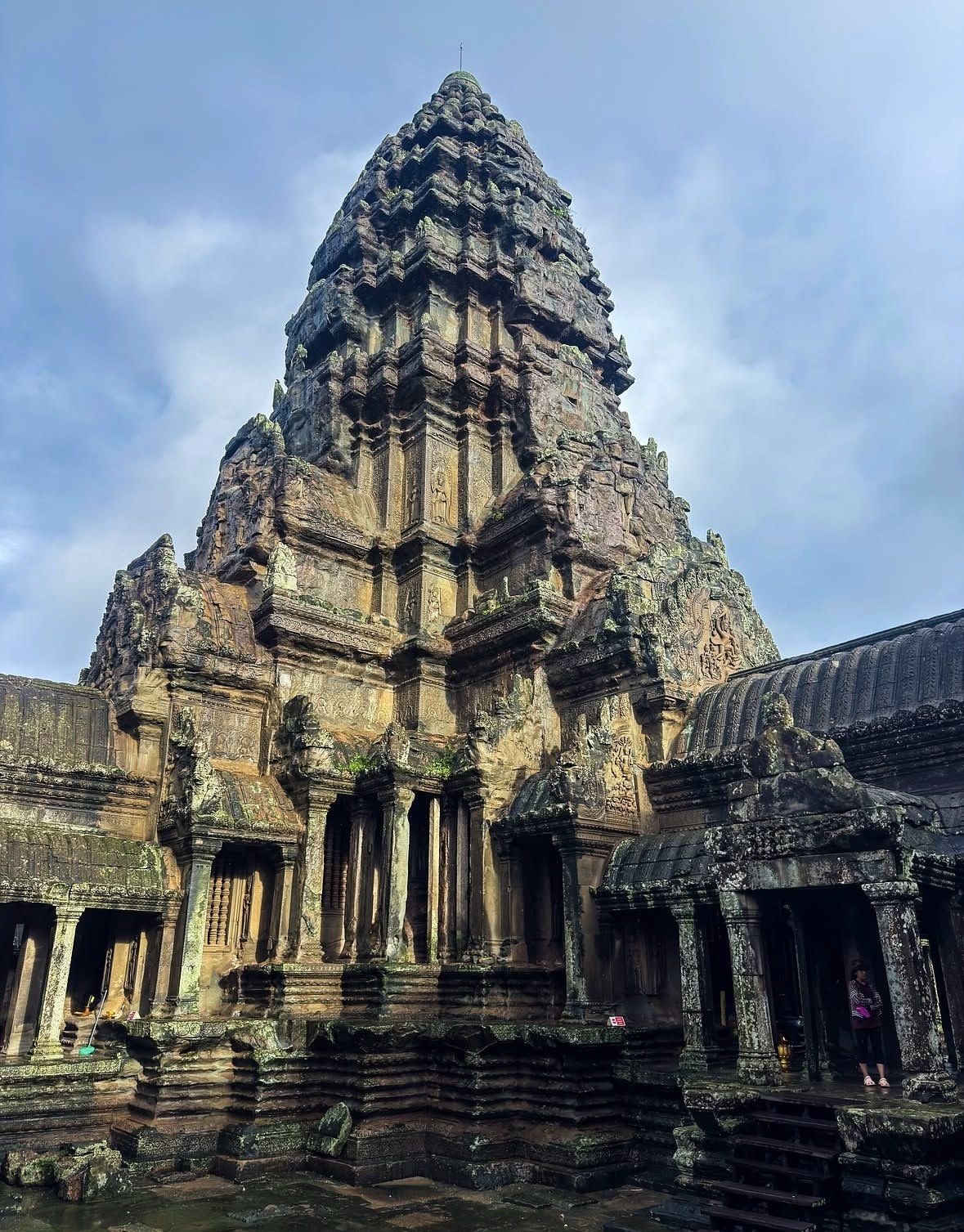
A single day starts on the western causeway at 5:00 AM. Angkor Wat opens at 5:00 AM for sunrise (Srah Srang and Phnom Bakheng also admit visitors from 5:00 AM), and it shuts again at 5:30 PM, earlier than the park itself. Sunrise arrives later than most people assume: around 05:39 at the June solstice, about 06:08 at the March equinox, and as late as 06:31 in mid-January, so there is a long wait in the dark if you misjudge it. Sort the pass out before that morning. Your guide can obtain one, or you can buy after 5:00 PM the previous evening, which the official help centre confirms counts for the following day.
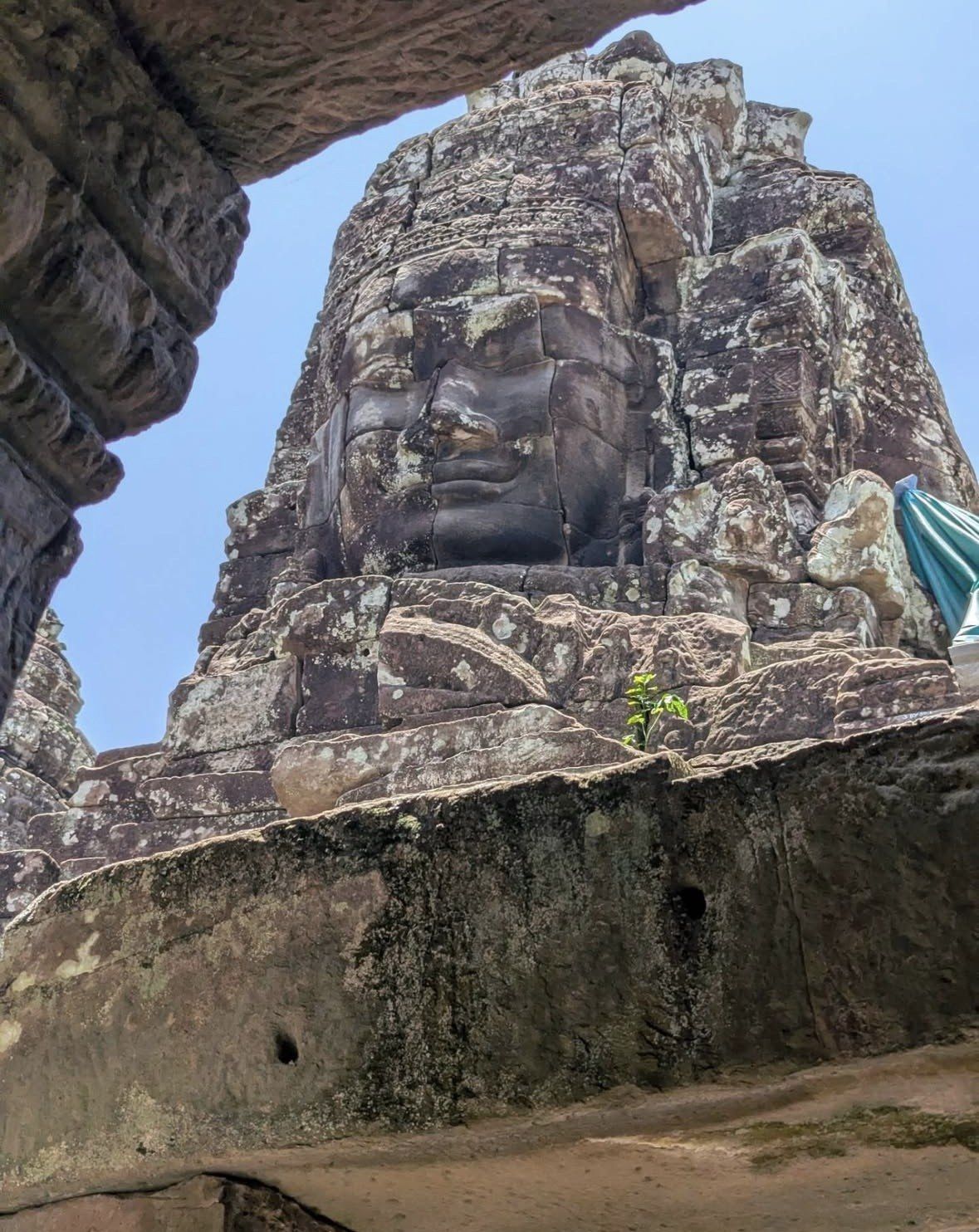
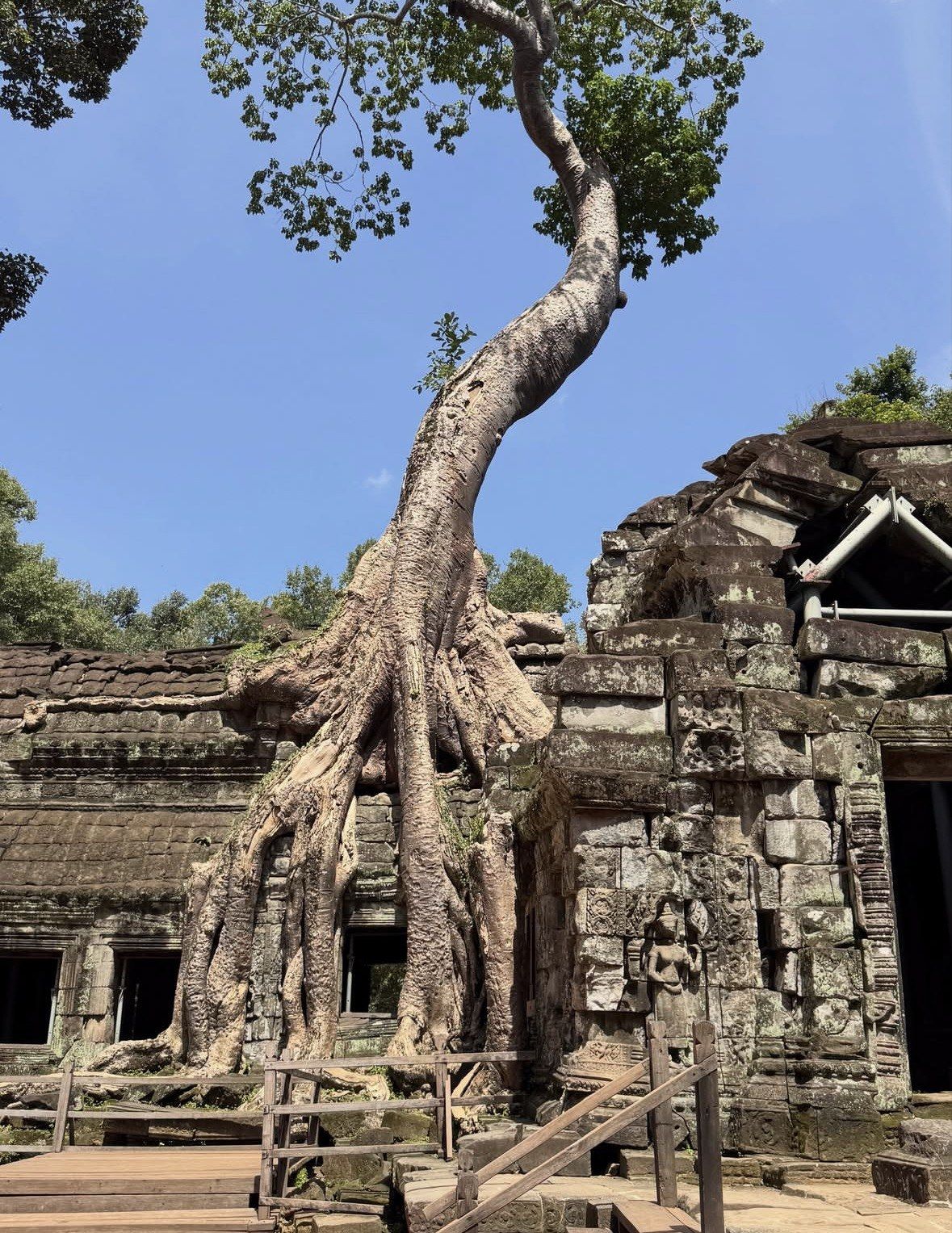
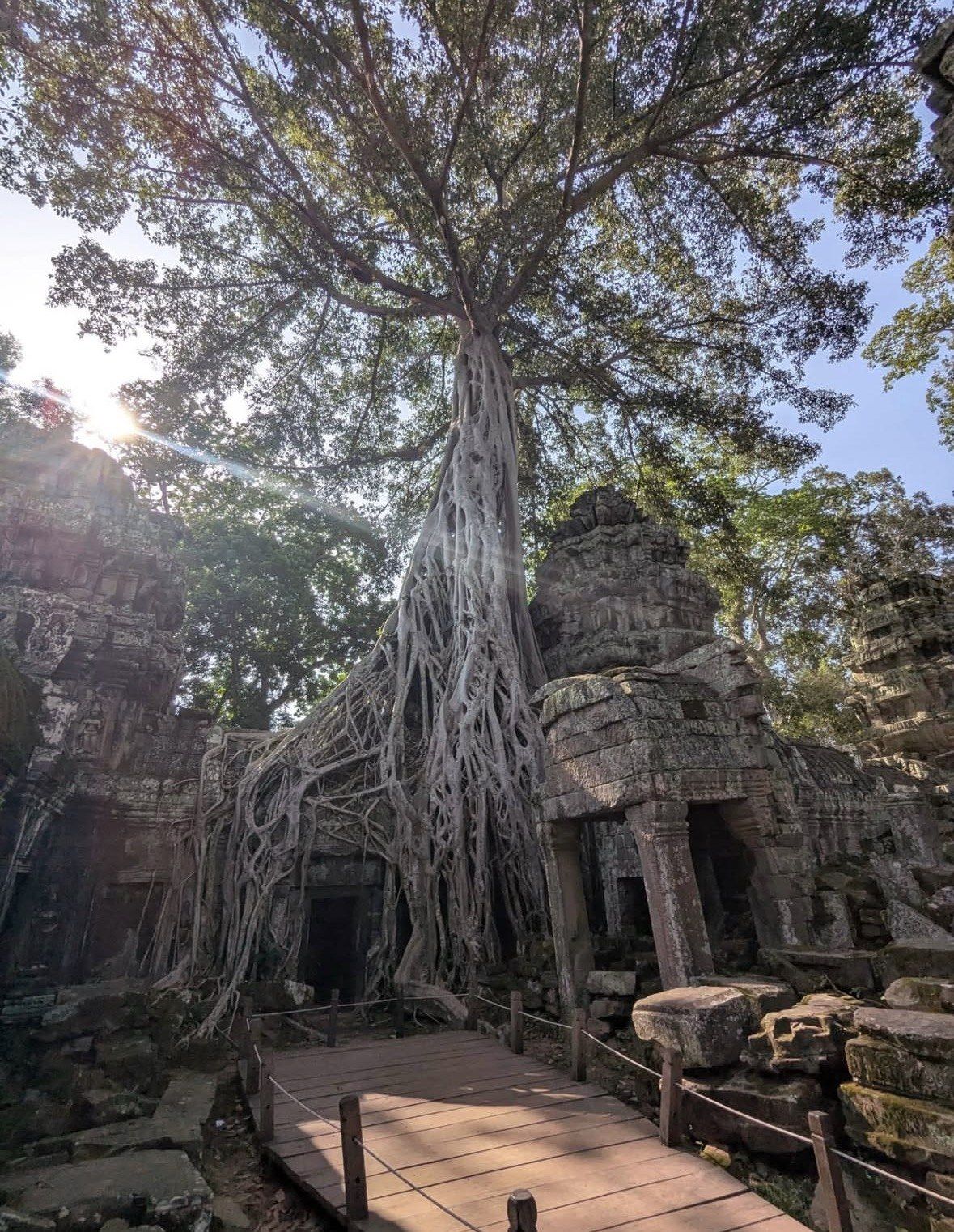
Work the galleries while the light is low, then take the eastern wooden stairway up to the Bakan, the upper level, which opens at about 6:40 AM rather than with the temple. Angkor Thom comes second because the Bayon and the Baphuon stay shut until 7:30 AM, as does Ta Prohm, 3 km north-east.
By early afternoon you will have had five or six hours of stone, sun and walking, and the sensible move is to stop rather than add another temple. If energy holds, Phnom Bakheng stands 1.5 km from Angkor Wat and is listed to 7:00 PM, but plan to be down by the park's 6:30 PM closing; Preah Khan runs to 6:30 PM. Both are still usable long after Angkor Wat has closed its gates at 5:30 PM.
- 5:00 AM: the causeway at Angkor Wat for sunrise
- About 6:40 AM: the eastern stairway up to the Bakan, the upper level
- 7:30 AM: the Bayon and the Baphuon inside Angkor Thom
- After Angkor Thom: Ta Prohm, 3 km away, also closed until 7:30 AM
- Late afternoon, optional: Preah Khan to 6:30 PM or Phnom Bakheng until the park's 6:30 PM closing
One day, guided, from $18
If your temple stay is a single day, this 8-hour tour from Siem Reap puts the 5:00 AM opening, the 7:30 AM gates and the driving between them in someone else's hands, with an English guide and an air-conditioned vehicle.
★ 5.0/5 · 13,742 reviews
Two days: the small circuit, then the grand circuit
Two days splits cleanly along the two loops. Day one takes the small circuit, about 17 km (10.5 miles), running from Angkor Wat out to Srah Srang, on past Ta Prohm and Ta Keo, and into Angkor Thom through the Victory Gate on the eastern side. Give the second day to the longer loop, about 25 km (15.6 miles): east from Srah Srang to Pre Rup, East Mebon and Neak Pean, then Preah Khan, re-entering Angkor Thom by the north gate for the Bayon. Neither loop reaches Banteay Srei.
Skip the second sunrise. One dawn at Angkor Wat is the point of the 5:00 AM opening. For day two, Srah Srang admits visitors from 5:00 AM and Pre Rup from 6:00 AM, both without the causeway crowd, or you can start late and finish at Preah Khan, open to 6:30 PM.
Buy the three-day pass even for a two-day stay. At $62 it undercuts two single days, and the spare day inside the 7-day window covers a washed-out afternoon or a third early start you cannot face.
Three days spread across a week
The three-day plan that works best spreads those days across the week. Day one goes to Angkor Wat at dawn, then Angkor Thom from 7:30 AM. Day two covers the small circuit properly, which means standing inside Ta Prohm for a while instead of walking through it on the way back to the vehicle. Day three is either the grand circuit or the half-day run to Banteay Srei, which sits about 25 km north-east of the main group, roughly 25 to 30 km from Siem Reap, and is too far out to bolt onto either loop.
Put a non-temple day in the middle. The pass expires in 7 days rather than on the third morning, so a rest day, a Tonle Sap afternoon or a day written off by rain costs you nothing, and you come back to the stone with fresh legs. Plan the middle day as the flexible one.
Check Banteay Srei's hours the day before you commit to an early departure. It has a staffed counter of its own, as do Beng Mealea and Koh Ker, which saves a detour if you add those sites later.
Plan the hottest hours out of the day
Temple days run long because the hours force them to: the park admits visitors from 5:00 AM and most of the major monuments shut at 5:30 PM, with the unusable middle of the day in between. Build the plan around two sessions and spend the hottest hours back in Siem Reap, returning to the park at four o'clock.
Dress for the full day before you leave the hotel: shoulders and knees covered, light fabric, a scarf or sarong in the bag. Revealing clothing is banned in sacred places under the visitor code of conduct, and foreign-office advice is blunt that admission to religious sites including Angkor Wat can be refused on those grounds. Being turned back at the upper level or a temple gate over clothing can cost you the day you planned. Tripods are discouraged inside the temples, which is worth knowing before you pack one for the 5:00 AM causeway.
A spare half-day inside the 7-day window fills itself without more Khmer stone. The Angkor National Museum sits on the main road towards the temples and opens 08:30-18:00 from 1 April to 30 September, then 08:30-18:30 from 1 October to 31 March. Phare, The Cambodian Circus performs nightly at 8:00 PM for about an hour. Artisans Angkor keeps a craft workshop in the middle of town, where you can watch the master artisans at work.
- Kampong Phluk, about 20 km south-east, where the water is high from about July to November and the stilt houses appear to float
- Chong Kneas, the closest floating village, 16 km south of the city centre and about 25 minutes by road
- Phnom Kulen, about 50 km out on a separate national park ticket; the mountain road runs one way, up between roughly 7:00 and 11:00 AM and down from around 11:45 AM, so it takes a whole day
- The tethered Angkor Balloon, which rises to about 120 m for a ride of 10 to 15 minutes and needs no temple pass
- The dry months are easier going: the monsoon runs June to October, with storms damaging roads and bringing flash flooding
Decide the length of the stay, then choose the tour
Decide the number of temple days first, then pick the guided days that fit, because sequencing is where hours get lost standing at gates that open at 7:30 AM. For one day, the sunrise or sunset tour from Siem Reap runs 8 hours from $18, rated 5.0 ★ (13,742 reviews): English tour guide, air-conditioned vehicle, cold water and a cold towel. The Angkor pass is paid separately.
For two or three days, combine rather than repeat. One guided dawn day covers Angkor Wat and Angkor Thom in the right order, which is the order the opening hours dictate. A compact second day then goes to the private day tour from Siem Reap, 6-7 hours from $49 and rated 5.0 ★ (1,052 reviews), with hotel pickup and drop-off, an experienced English-speaking guide, cold bottled water, and tuk-tuk transport for 1-3 passengers or a minivan from 4 upwards. The listing is clear that the $37 per-person park ticket is required and sits outside the tour price.
Travellers based in Thailand have one sensible shape: the 2-day trip from Bangkok, from $350 and rated 4.8 ★ (220 reviews), with airport pickup and drop-off, a private air-conditioned vehicle, a licensed tour guide and one night in a 4-star hotel with breakfast. It gives you a single full temple day, so plan that day as Angkor Wat at the 5:00 AM opening and Angkor Thom afterwards. Outside the price: the Cambodia visa, lunch and dinner, and the temple ticket.
Questions people ask
Is there a 2-day Angkor pass?
The official price list has three lengths only: one day at $37, three days at $62 and seven days at $72. A two-day temple stay therefore comes out cheapest on the three-day pass, with the spare day unused. Whichever length you settle on, your tour guide can obtain the pass for you.
Do the days on a multi-day pass have to be consecutive?
No. The official site states that the three-day pass expires in 7 days and the seven-day pass in 30 days, so you choose which days inside that window you actually enter the park. That is what lets you insert a rest day or drop an afternoon of heavy rain without losing a visit day.
Should I do a second sunrise at Angkor Wat?
One dawn on the causeway is enough. If you want early light again, Srah Srang admits visitors from 5:00 AM and Pre Rup from 6:00 AM, both inside the park. Taking the extra hours at the other end of the day works just as well: Angkor Wat locks up at 5:30 PM, while Preah Khan runs to 6:30 PM and Phnom Bakheng is listed to 7:00 PM, but plan to be down by the park's 6:30 PM closing.
How many days do I need if I also want Beng Mealea and Koh Ker?
Count four days or more and take the seven-day pass at $72, valid within 30 days. None of those sites sits on the Angkor pass, so add a day ticket for each: $15 at Koh Ker, $10 at Beng Mealea, $5 at Kbal Spean. Their gates also open from 6:00 AM instead of 5:00 AM, which rules out a dawn start on those days. Each has its own staffed ticket counter.
When is the best time of year for a three-day temple stay?
Three temple days go more smoothly in the dry season. Official advice puts Cambodia's monsoon between June and October, when storms damage roads, cause landslides and bring flash flooding. If those are your dates, the three-day pass and its 7-day window give you the slack to move a temple day when the weather turns.
Read also