In shortAngkor Wat was built in the early 12th century by King Suryavarman II, as his state temple and eventual mausoleum. The first dedication was to the Hindu god Vishnu, and the temple was in Buddhist use by the end of that same century. It faces west, which is unusual for an Angkorian temple, and the enclosure covers 162.6 hectares (402 acres).
Early 12th centurywhen Angkor Wat was built
1992UNESCO inscription of Angkor
162.6 hatemple enclosure, 402 acres
65 mcentral tower above ground
Angkor Wat was built in the early 12th century, for Suryavarman II
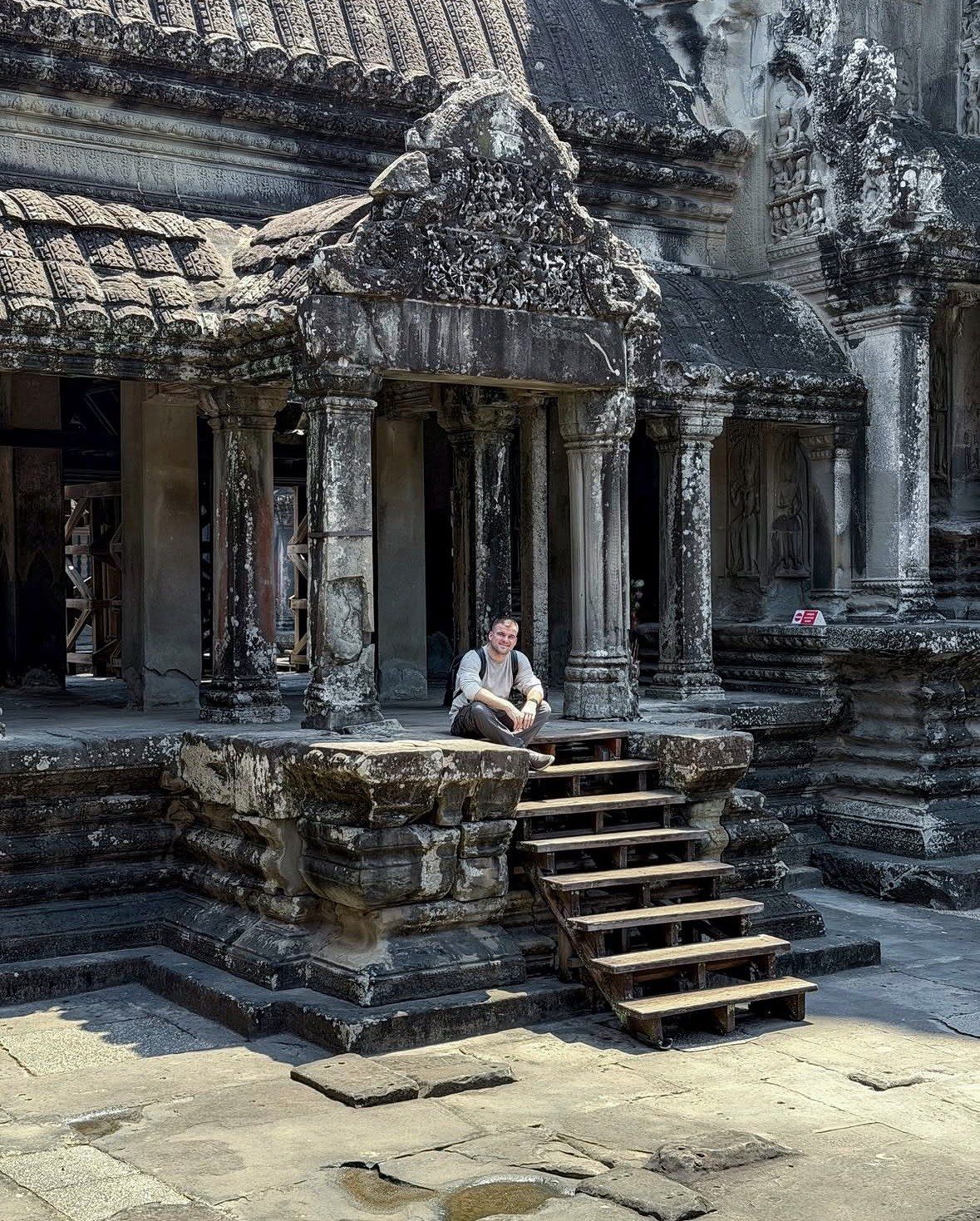
The official temple page gives the construction period as the early 12th century and names King Suryavarman II as the man who ordered it. Two functions were planned into the same building: the state temple of his reign, and the place that would hold him after death. That double purpose explains the size. Angkor Wat covers 162.6 hectares (402 acres) and the ticketing authority calls it the largest religious monument in the world, with three rectangular galleries set one above the other and a central tower reaching 65 m above the ground.
A state temple in Angkor was the religious centre of a reign, so the scale is political as much as devotional. The outer wall runs 3.6 km, the moat around it is about 190 m wide with a perimeter of over 5 km, and the ground inside was laid out as one continuous composition rather than added to piece by piece over generations. Stand on the causeway and you are looking at one king's project, finished to a single plan.
From Vishnu to Buddhist use within the same century
The first dedication was to Vishnu, and almost everything carved on the inner wall of the outer gallery belongs to that world: the Churning of the Sea of Milk on the eastern side, the Ramayana and Mahabharata battles on the west, Krishna against the asura Bana on the north. The one scene taken from the king's own time, the procession of Suryavarman II, sits on the southern wall beside the panel of the 32 hells and 37 heavens.
By the end of the 12th century the temple was Buddhist, according to the same official page. The shift took less than a hundred years from the first consecration, and it was never undone. Angkor Wat is still a place of worship, which is why revealing clothing is banned in sacred areas by the visitor code of conduct, why the upper level requires modest dress, and why on the four Buddhist holy days each month the Bakan is open only to Cambodian visitors for worship.
The history read out loud on site
Eight hours from $18, rated 5.0 ★ (13,742 reviews), with an English tour guide to name the panels and the kings as you pass them, an air-conditioned vehicle between monuments, cold water and a cold towel, and your choice of the dawn or the late-afternoon shape of the day; the park pass is paid separately.
★ 5.0/5 · 13,742 reviews
Why the temple faces west
Angkor Wat faces west, which the official temple page notes as unusual for an Angkorian monument. The practical result is that visitors arrive on the western side, cross the moat and work inward towards the east, and that the sun comes up behind the towers. Suryavarman II's surveyors set that axis so exactly that twice a year, at the spring and autumn equinoxes, anyone standing on the western causeway sees the sun rise directly behind the central tower.
The orientation also shapes a visiting day. Because the temple opens at 5:00 AM and stays open until 5:30 PM, you can stand on the causeway and watch that 12th-century axis at first light. The park itself admits visitors from 5:00 AM and closes at 6:30 PM; check the hours on the day, since individual temples keep their own.
Where Angkor Wat sits in the Angkorian sequence
Angkor Wat belongs to the middle of the Angkorian period. Phnom Kulen, about 50 km from Siem Reap, is where Jayavarman II declared himself universal monarch in 802 CE, the moment usually taken as the start of the Khmer Empire. More than two centuries before Suryavarman II's masons began, Yasovarman had already raised the hilltop temple of Phnom Bakheng, at the end of the 9th century, to serve as the principal temple of the capital he was founding, Yasodharapura.
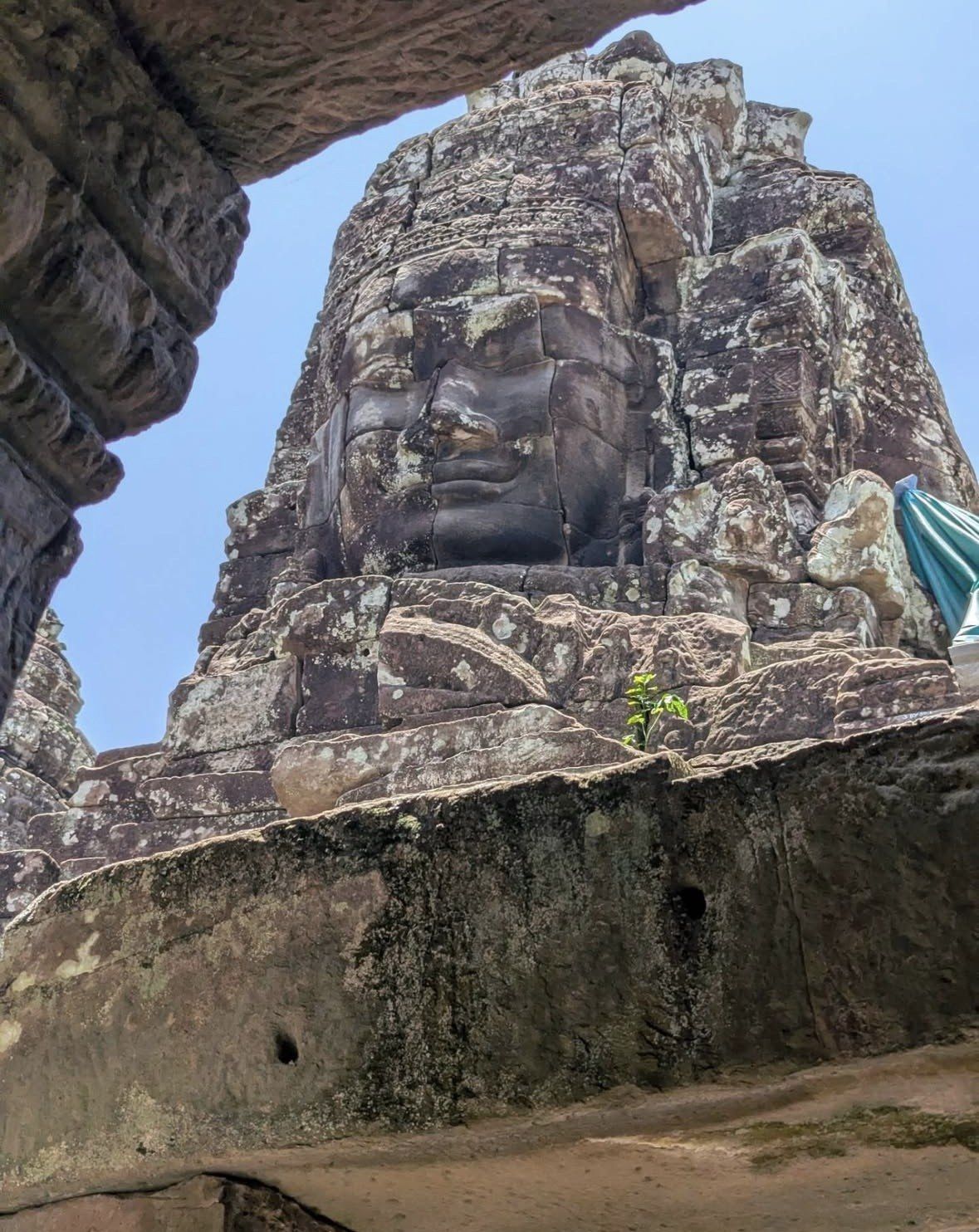
The pattern of a king building his own state temple continued after Suryavarman II. Jayavarman VII founded Ta Prohm in 1186 for his mother, dedicated the main image at Preah Khan in 1191 in honour of his father, and built the Bayon as the state temple of a Mahayana Buddhist reign in the late 12th or early 13th century. Restoration history also varies by site: the Baphuon reopened after a stone-by-stone rebuild that took 51 years and finished in April 2011, while Preah Khan has been deliberately left largely unrestored.
The dates below come from the official temple pages. They are the most useful thing to carry in your head on a temple day, because they tell you what you are looking at and in what order it was made.
| Temple | Date | King | What it was for |
|---|
| Phnom Bakheng | End of the 9th century | Yasovarman | Principal temple of the new capital Yasodharapura |
|---|
| Banteay Srei | Consecrated 22 April 967 AD | Rajendravarman II (built by his counsellor Yajnavaraha) | Unusually fine carving held in reddish sandstone; 25 km north-east of the main group |
|---|
| Baphuon | Mid-11th century | Udayadityavarman II | State temple of its reign; open again since April 2011, after 51 years of rebuilding |
|---|
| Angkor Wat | Early 12th century | Suryavarman II | Suryavarman's own state temple, later his mausoleum; Vishnu at the first dedication |
|---|
| Ta Prohm | Foundation stele of 1186 AD | Jayavarman VII | Buddhist monastery Rajavihara, dedicated to his mother |
|---|
| Preah Khan | Main image dedicated 1191 | Jayavarman VII | Built to honour his father; left largely unrestored |
|---|
| Bayon | Late 12th or early 13th century | Jayavarman VII | State temple of a Mahayana Buddhist reign |
|---|
Angkor Wat facts worth carrying with you
Angkor as a whole was inscribed on the UNESCO World Heritage List in 1992, with a listed property of 40,100 hectares holding around 72 major monuments and several hundred minor sites. Angkor Wat is one monument inside that property, and a single park pass opens more than 50 accessible temples; across all its ticketed sites the authority promotes more than 90 temples.
The reliefs carry no labels and the walls carry no dates, so the chronology above becomes visible only if someone points it out while you walk. Take a guide on your first day, when the names and the dates still need saying out loud.
- Built in the early 12th century by King Suryavarman II, as state temple and mausoleum
- First dedicated to Vishnu, in Buddhist use by the end of the same century
- Faces west, unusual among Angkorian temples, with an equinox alignment on the central tower seen from the western causeway
- Enclosure of 162.6 hectares (402 acres), called the largest religious monument in the world by the ticketing authority
- Suryavarman's builders dug a moat about 190 m wide, over 5 km around, and set it inside an outer wall of 3.6 km
- The tower at the centre rises 43 m from its own base, putting its tip 65 m over the ground
- Angkor inscribed by UNESCO in 1992: 40,100 hectares, around 72 major monuments
- Open 5:00 AM to 5:30 PM, in time for sunrise
Questions people ask
Who built Angkor Wat?
King Suryavarman II, in the early 12th century, according to the official temple page. He had it built as the state temple of his reign and as the place that would serve as his mausoleum. The first dedication was to the Hindu god Vishnu.
Is Angkor Wat Hindu or Buddhist?
It began as a Hindu temple dedicated to Vishnu and was Buddhist by the end of the 12th century. It remains a working religious site today. That continuity has practical consequences: four days a month, the Buddhist holy days, the Bakan upper level is reserved for Cambodian visitors at worship, and the visitor code of conduct rules out revealing clothing in sacred places.
Which Angkor temple is older than Angkor Wat?
Phnom Bakheng, by more than two centuries: Yasovarman raised it at the end of the 9th century as the principal temple of his capital, Yasodharapura. Banteay Srei is older too: its consecration is dated 22 April 967 AD, and it stands about 25 km north-east of the main group. The Baphuon in Angkor Thom is mid-11th century, under Udayadityavarman II.
Why do some temples look rebuilt and others look ruined?
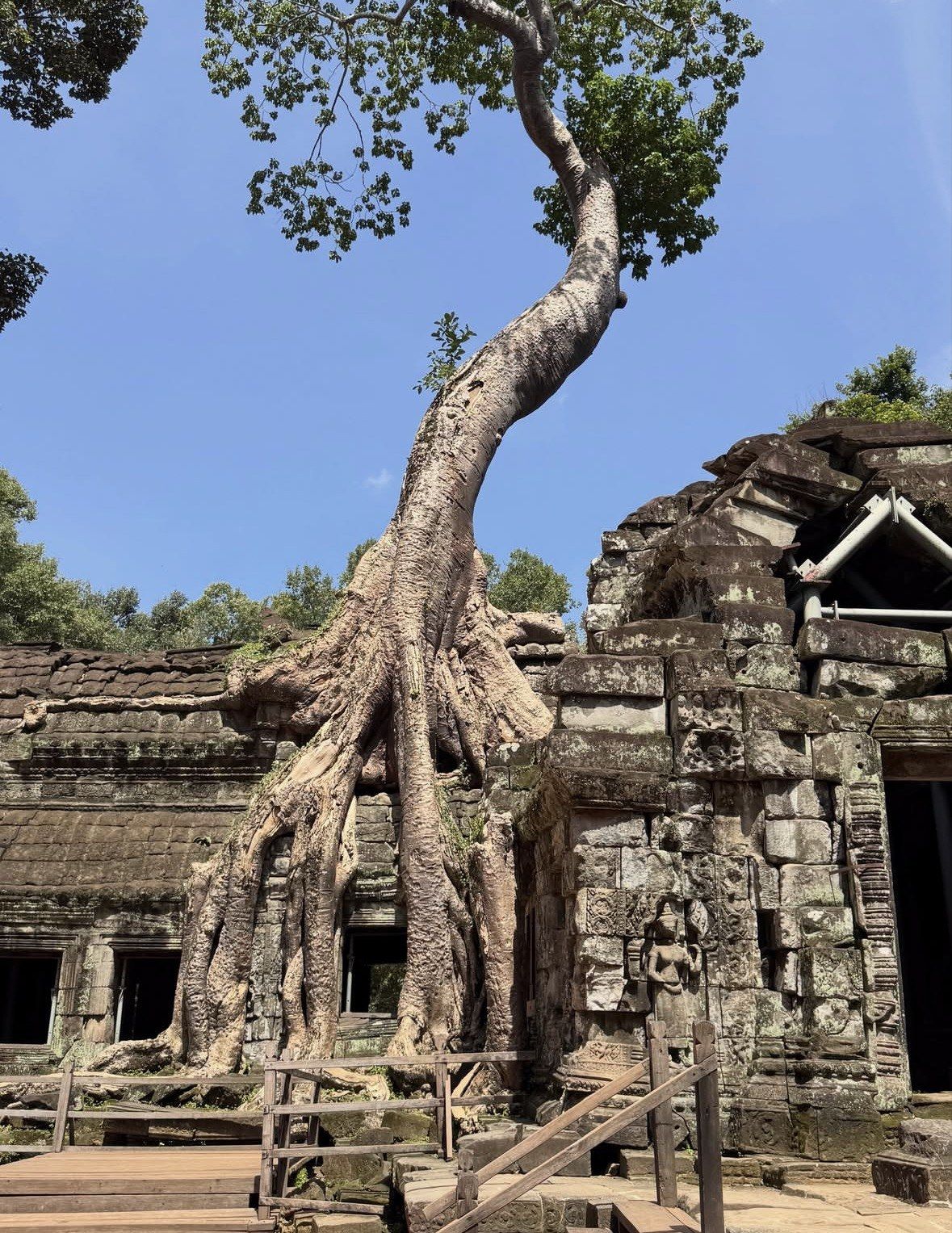
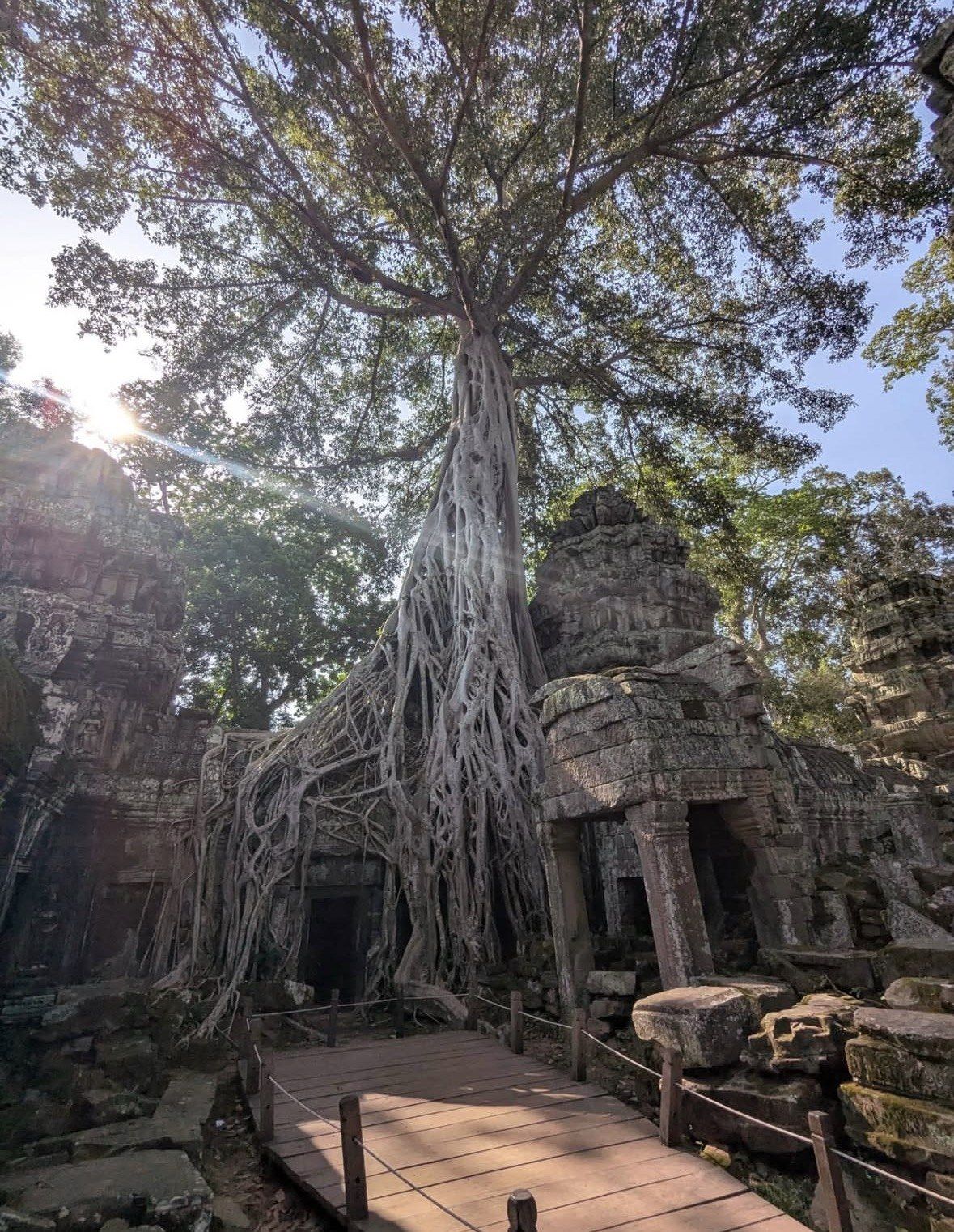
Conservation choices differ by monument. The Baphuon was taken apart and reassembled stone by stone over 51 years, reopening in April 2011, while Preah Khan has been deliberately left largely unrestored. At Ta Prohm the work has been run jointly by the Archaeological Survey of India and APSARA, with wooden walkways and platforms installed to keep visitors off the fabric.
When did Angkor become a World Heritage Site?
Angkor was inscribed on the UNESCO World Heritage List in 1992. The listed property covers 40,100 hectares and contains around 72 major monuments plus several hundred minor sites. Angkor Wat is one monument within it, covering 162.6 hectares (402 acres).
How much of the history can you actually see in one visit?
Enough for a first visit, as long as you plan around the opening hours. Angkor Wat opens at 5:00 AM and closes at 5:30 PM, so the carved galleries and the climb fill a morning on their own, and a guide can place the reliefs and the kings as you go. The Bayon, the Baphuon and Ta Prohm do not open until 7:30 AM, which is why a dawn start means Angkor Wat first and Angkor Thom afterwards.
Read also