In shortCover your shoulders and knees for the whole visit. Two separate rules sit behind that: the visitor code of conduct lists revealing clothing among the things forbidden in sacred places, and UK foreign-office advice puts refusal of entry at Cambodian religious sites, Angkor Wat among them, down to clothing that shows too much. Enforcement is tightest at the Bakan, Angkor Wat's upper level, where modest dress is required before anyone lets you onto the stairway.
6:40 AMBakan stairway opens
100 at a timeBakan group limit
15 to 30 minutesTime on the upper level
Since 2012Angkor is smoke-free
The Angkor Wat dress code, stated plainly
Shoulders covered, knees covered. Vest tops, spaghetti straps, bare midriffs, short shorts and short skirts all fall outside that. The official visitor code of conduct bans revealing clothing in sacred places, and UK foreign-office advice goes further by warning that visitors can be refused admission to religious sites in Cambodia, Angkor Wat included, when they are dressed too revealingly.
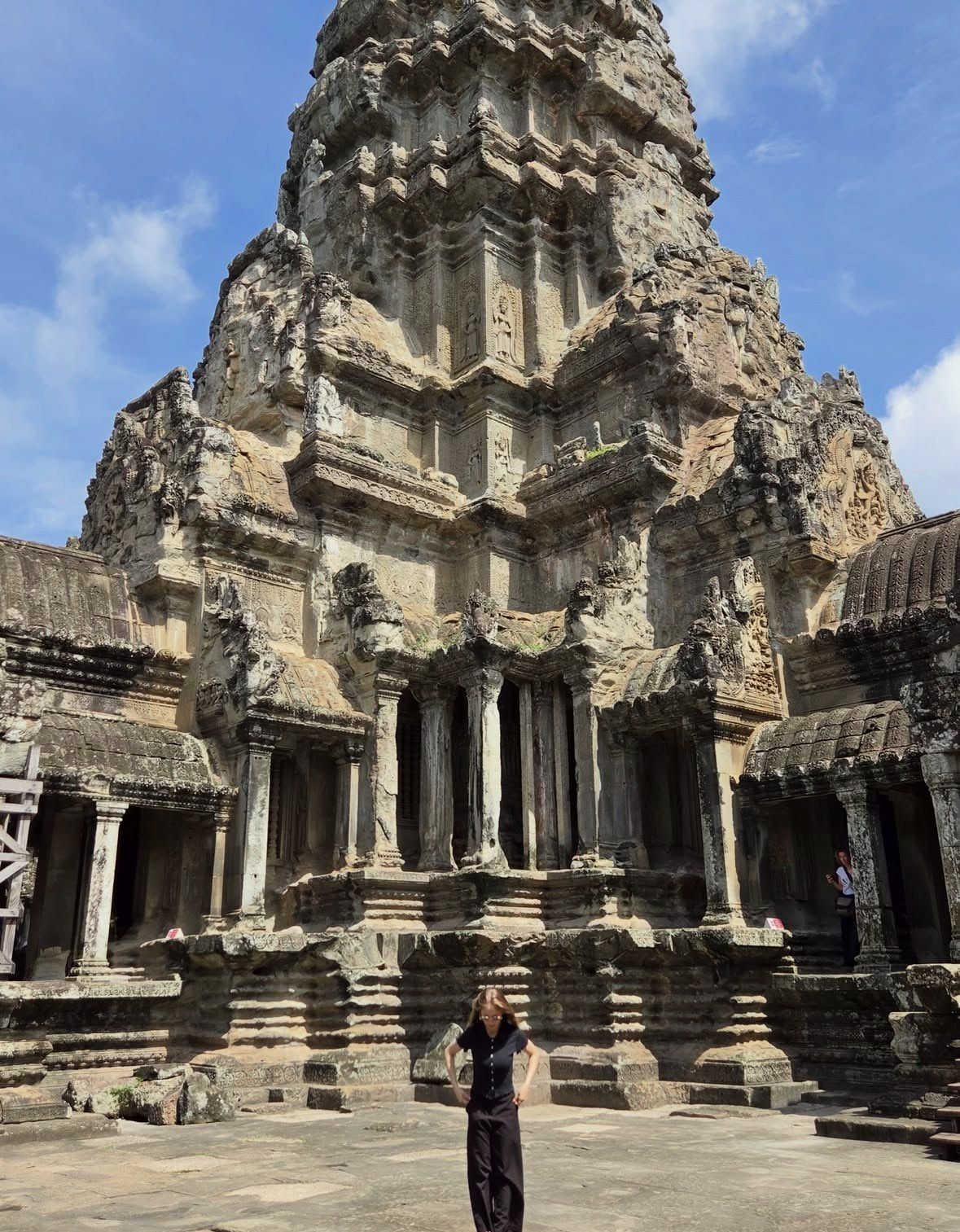
The strictest point is the Bakan, the upper level of Angkor Wat. Its wooden stairway on the eastern side opens at about 6:40 AM, later than the temple's 5:00 AM admission, and access has been run in groups of 100 at a time with 15 to 30 minutes each. Modest dress is a condition of being waved up. If you are turned back there you do not get a second slot, you get the queue again, assuming there is time left.
Sort your clothes out in your room before the vehicle leaves. Your pass is scanned at every temple checkpoint, so you are carrying it all day, and Angkor Wat sits 6 km north of Siem Reap town centre, about 12 minutes by road. Going back for a change of clothes writes off the best part of a morning.
- Shoulders covered: t-shirt, long sleeves or a shirt. A shawl pulled over bare shoulders is thin cover if it keeps slipping.
- Knees covered: trousers, long skirt, or shorts that clearly reach past the knee.
- Carry a light scarf or a sarong in your bag as a backup rather than assuming you can sort it out at the entrance.
- Dress for the Bakan from the start if you intend to climb, because the check happens at the foot of the stairway.
Guided day with the heat kit included
An 8-hour day from $18, rated 5.0 ★ (13,742 reviews), with an English tour guide, an air-conditioned vehicle between temples, cold water and a cold towel, so covering up all day costs you nothing in comfort.
★ 5.0/5 · 13,742 reviews
What to wear at Angkor Wat when it is hot
Covered and cool are not in conflict here. Loose cotton or linen in light colours beats tight synthetics, and a long-sleeved shirt you can roll up does more for you in open galleries than sunscreen alone. Local trousers and sarongs are cut wide for exactly this reason.
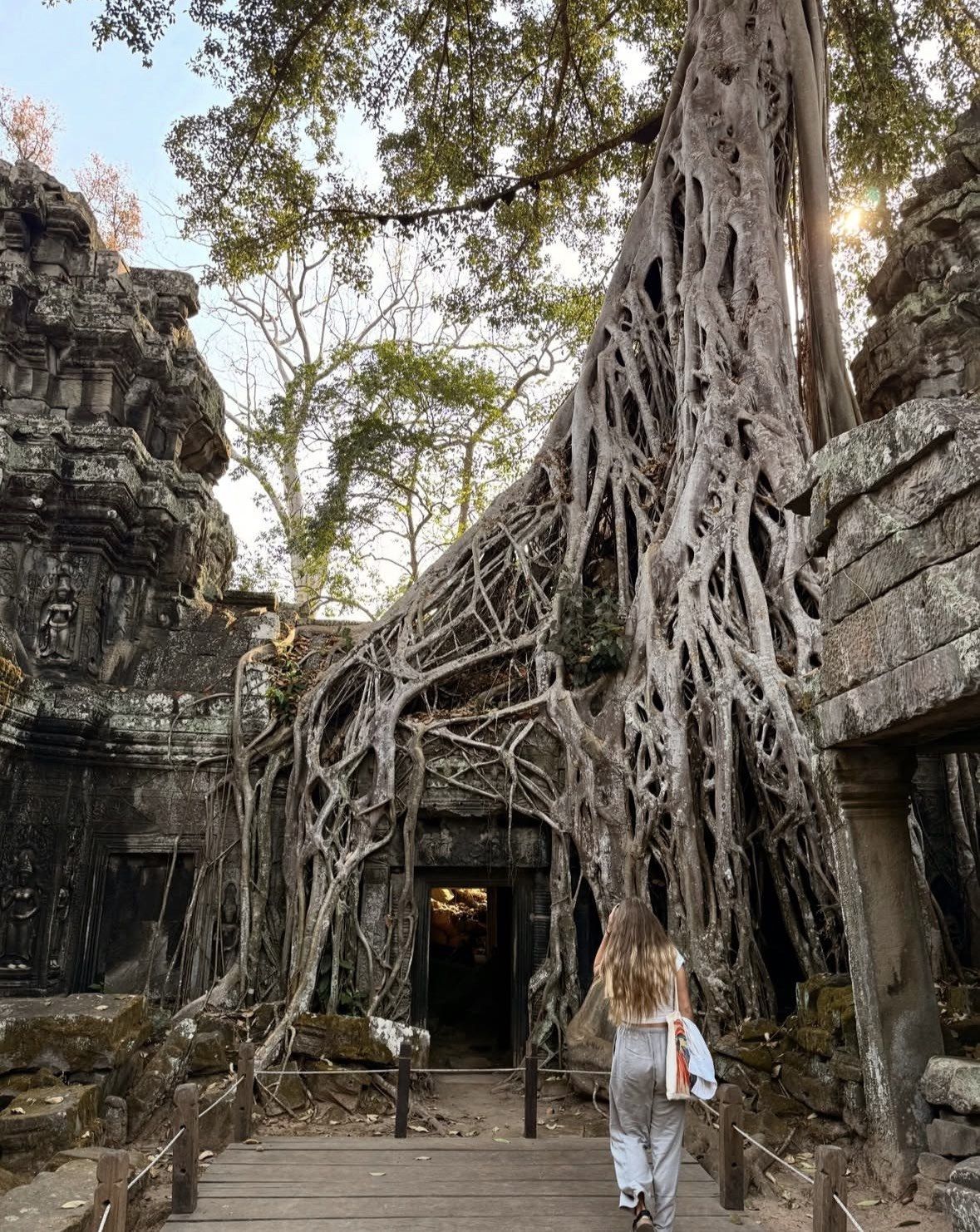
Footwear decides how much of the park you actually see. Surfaces are worn stone, loose sand, root-lifted paving and steep steps, and the code of conduct discourages high heels inside the temples. Closed shoes or sandals with a proper sole and a strap at the heel are the sensible choice. At Ta Prohm, 3 km north-east of Angkor Wat, much of the route runs on installed wooden walkways and platforms, which are fine underfoot but slick after rain.
You will walk more than the map suggests. The circuits themselves are driven, about 17 km (10.5 miles) for the small loop and about 25 km (15.6 miles) for the grand one, but each temple inside them is covered on foot, and Angkor Wat alone is a long walk in whatever you put on before dawn. A hat and sunglasses matter from mid-morning. The monsoon runs June to October, so in those months a light rain layer goes in the bag alongside everything else.
On the guided days the practical heat kit is handled for you: most of the vehicle-based tours on this site include an air-conditioned vehicle between temples, cold water and a cold towel, which is the difference between a full day and a half one in April.
What to carry, and what the code discourages
The published code of conduct asks visitors not to bring backpacks, sharp-tipped umbrellas, tripods or high heels into the temples. A small day bag, water and a hat is the right load. Leave cigarettes out of it, because the whole site has been smoke-free since 2012, and whatever packaging you bring in comes back out with you.
The table below is the code's own list of what is banned and what is discouraged, which is worth reading once before you go rather than discovering at a checkpoint.
| Item or action | What the official code of conduct says |
|---|
| Revealing clothing in sacred places | Banned |
|---|
| Backpacks, sharp-tipped umbrellas, tripods, high heels | Discouraged inside the temples |
|---|
| Smoking and littering | Angkor smoke-free since 2012; visitors asked not to litter |
|---|
| Touching carvings, sitting on fragile structures, leaning on temple structures | Prohibited |
|---|
| Moving or taking artefacts, graffiti | Prohibited |
|---|
| Photographing monks | Ask permission first |
|---|
| Climbing on loose stones, entering restricted areas | Obey posted signage |
|---|
| Giving candy or money to children | Donate to a recognised charity instead |
|---|
| Noise | Keep it down at the sacred site |
|---|
Behaviour around monks, shrines and carvings
Angkor is a working religious site with active shrines, and monks are there to worship rather than to be photographed. Ask permission before taking anyone's picture, and women should not touch monks or sit or stand too close to them.
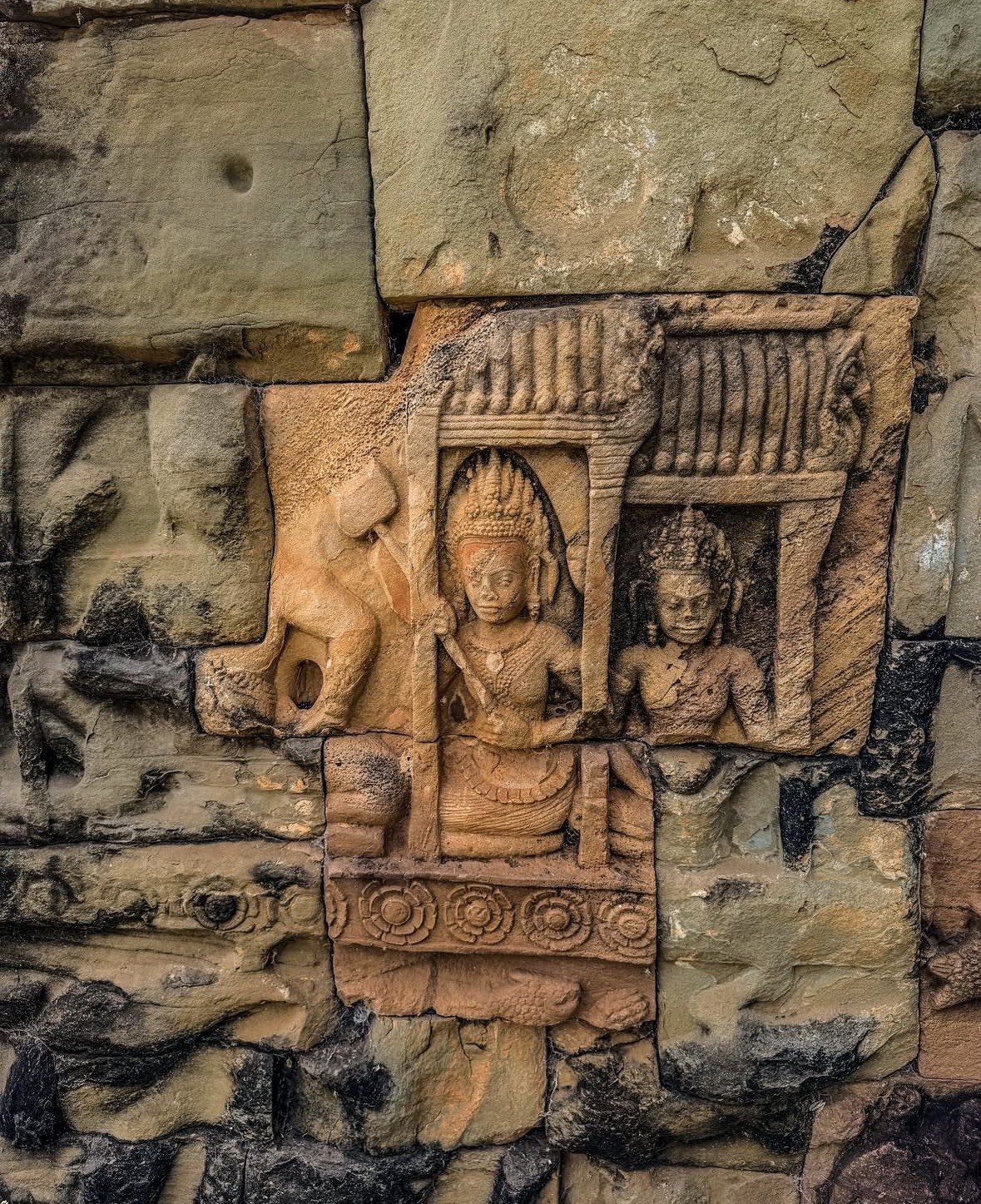
Hands off the stone. Touching carvings, sitting on fragile structures, leaning against temple walls, moving or removing anything, and graffiti of any kind are all prohibited. The bas-reliefs that run around Angkor Wat's outer gallery are the obvious temptation, and the oil from thousands of hands is precisely what wears them away.
Where a temple is restricted, the rule is simply to obey the posted signage and to stay off loose stones. That covers collapsed sections, blocked doorways and roped routes. Four days a month, the Buddhist holy days, the Bakan returns entirely to its religious use and only Cambodian visitors are admitted there to worship, so everyone else stays on the lower levels.
Keep your voice down near shrines where people are making offerings, and do not hand candy or money to children around the temples. The code asks visitors to give to a recognised charity instead.
Drones, tripods and photography
Tripods are on the code's discouraged list for inside the temples, along with backpacks and sharp-tipped umbrellas. Plan to shoot handheld, or to set up outside the monuments, by the moat and along the approach rather than inside the galleries.
Drones are a separate matter. The published Angkor code of conduct does not mention them, and permissions sit with the heritage authority rather than with the ticket counter, so do not treat silence as approval. Anything commercial, filming included, needs clearance arranged in advance. Check the current position with your guide or the authority before you pack a drone, and expect to be stopped if you launch one without paperwork.
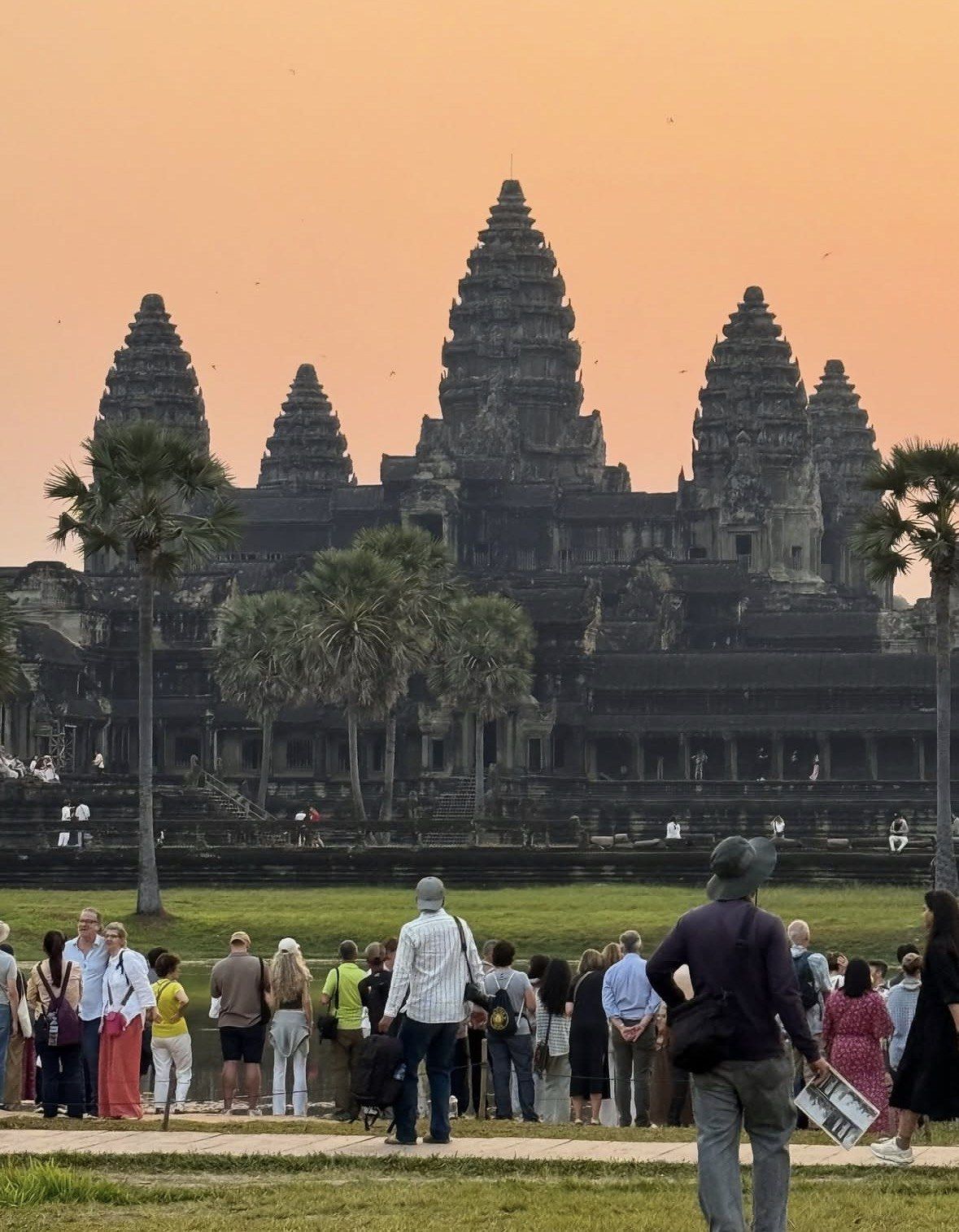
Low light is the best light anyway. Angkor Wat opens at 5:00 AM for sunrise (Srah Srang and Phnom Bakheng also admit visitors from 5:00 AM), which is why photographers start there, and at the spring and autumn equinoxes the sun comes up directly behind the central tower as you see it from the western causeway. Sunrise runs from about 05:39 at the June solstice to around 06:31 in mid-January, so check the date before you set an alarm.
Stay on marked routes at the outlying sites
Landmines and unexploded ordnance remain a hazard in parts of rural Cambodia, and official advice is to keep to main routes in rural areas, including around temple complexes. In practice that means walking the cleared paths and signed routes at places such as Beng Mealea, Koh Ker and Kbal Spean, and not cutting through undergrowth for a better angle.
Each of those three needs a ticket of its own, and their gates do not open until 6:00 AM, an hour behind Angkor, though closing time is the same 6:30 PM. They are long drives, so you are out there with a driver and guide who know which paths are used. Follow them rather than wandering.
Roads are the other constraint on a temple day. Cambodia has one of the highest road accident rates in Southeast Asia and driving after dark raises the risk sharply, which is an argument for finishing the outlying runs well before the light goes.
Questions people ask
What happens if I arrive in a vest and shorts?
Expect to be stopped. UK government advice states that visitors can be refused admission to religious sites including Angkor Wat for clothing that is too revealing, and the official code of conduct bans revealing clothing in sacred places. Your pass is checked and scanned at every temple checkpoint, so one refusal can repeat itself all day. Angkor Wat is 6 km from Siem Reap town centre, so going back to change costs you hours.
Do I have to take my shoes off inside the temples?
The published Angkor code of conduct does not mention shoes. Where a shrine or an upper level is treated as an active place of worship, follow the posted signage and what staff or monks indicate on the spot. Wear footwear you can slip off quickly if asked, which is another argument against laces at the bottom of a steep stairway.
Can I smoke at Angkor?
No. Angkor has been a smoke-free site since 2012, and the code of conduct asks visitors not to smoke or litter anywhere in the park. The rule covers the causeways, the moat banks and the open grounds between temples as well as the galleries.
Is the Bakan upper level always open to visitors?
No. On the four Buddhist holy days each month, admission to the Bakan is reserved for Cambodian visitors who come to worship. On other days the stairway opens at about 6:40 AM, access has been managed in groups of 100 at a time for 15 to 30 minutes each, and modest dress is required. Treat the climb as a possibility rather than a fixed item in your plan.
Can I give money or sweets to children at the temples?
The code of conduct asks visitors not to, and to donate to a recognised charity instead. It also asks visitors to keep noise down at the sacred site. Both read as rules at Angkor rather than suggestions, and guides will hold you to them.
Read also