In shortYes, once. Angkor Wat opens at 5:00 AM for sunrise (Srah Srang and Phnom Bakheng also admit visitors from 5:00 AM), and the classic first light belongs to its 350 m causeway. Sunrise runs from about 05:39 in June to about 06:31 in mid-January, which means 40 to 90 minutes of waiting in the dark. Cloud between June and October can take the colour away.
5:00 AMAngkor Wat opens
05:39Earliest sunrise, June
06:31Latest sunrise, mid-January
350 mWestern causeway
Angkor Wat sunrise: worth it once
Do it once, and build the rest of the day around it. That comes down to the timetable: Angkor Wat runs 5:00 AM to 5:30 PM while the Bayon, the Baphuon and Ta Prohm keep their doors closed until 7:30 AM. Most visitors who want dawn therefore head for the same causeway, and the temple faces west, so you stand on the far side of the moat looking east at the five towers as the sky changes behind them.
The waiting is the part people underestimate. Park entry opens at 5:00 AM and the sun comes up between about 05:39 at the June solstice and about 06:31 in mid-January, so a 5:00 AM arrival buys you anything from 40 minutes to an hour and a half standing in the dark. In the drier half of the year that wait usually buys a clear sky; in the monsoon months it can end with flat grey light.
Visitor numbers are also working for you at the moment. Between January and September 2026 the park counted 510,528 foreign arrivals, 27.6% fewer than the same stretch a year earlier, which changes how early you have to be at the gate. The advice written for far busier seasons, telling you to be on the causeway before the gates even open, is heavier than the current situation demands. Arrive at opening, walk straight out to the ponds, and you will find a spot.
Angkor Wat sunrise time by season
Sunrise at Angkor moves by nearly an hour across the year, and getting the date wrong is how people end up shivering on the causeway for ninety minutes or arriving to find the sky already pale. The table below sets out the times.
Cloud is the real variable. Cambodia's monsoon runs June to October, with storms that damage roads, cause landslides and bring flash flooding, so those mornings carry both the earliest sunrise and the highest chance of losing it to weather. From November onwards the sky is steadier and the drive out is easier, at the cost of a later start. If you are buying a pass that covers more than one visit day, keep a spare morning in reserve rather than betting everything on one dawn.
| Point in the year | Sunrise at Angkor | Wait after the 5:00 AM opening |
|---|
| June solstice | about 05:39 | about 40 minutes |
|---|
| March equinox | about 06:08 | about 1 hour |
|---|
| December solstice | about 06:22 | about 1 hour 20 minutes |
|---|
| Mid-January (latest of the year) | about 06:31 | about 1 hour 30 minutes |
|---|
Private sunrise, 8 hours from Siem Reap
Being at the 5:00 AM opening with a guide who knows where to stand at the northern pond, and no group schedule pulling you off the galleries afterwards, is what makes the early alarm pay.
★ 5.0/5 · 3,558 reviews
Where to stand on the causeway
Everyone converges on the same two ponds, which sit either side of the 350 m western causeway, just in front of the third flight of steps next to the outer libraries. The northern pond is the one restored in 2020 and it is where the tripods go; the four ponds inside the cruciform cloister are dry, so there is no reflection to be had further in. People pack the western edge of the northern pond because that is where the water lines up under the towers.
Walk a little and the pressure drops. The enclosure covers 162.6 hectares, the outer wall runs 3.6 km and the moat is about 190 m wide with a perimeter of over 5 km, so a few minutes north or south along the moat bank and the open ground beside it gives you clear sightlines without a row of heads in front. The central tower rises 65 m above the ground and still fills the frame from well off the central axis.
Twice a year, at the spring and autumn equinoxes, the sun comes up directly behind the central tower as you look east from the western causeway, and those are the two mornings when holding the packed centre line pays for itself. Outside those dates, take a side angle along the causeway.
Two other viewpoints in the park open early enough for dawn if you want the light without the causeway: Srah Srang admits visitors from 5:00 AM and Pre Rup from 6:00 AM.
- Northern reflecting pond, restored in 2020: the classic reflection, the densest crowd
- Southern pond, across the causeway: often dry, but a wider angle with more room
- North or south along the moat bank and the wall: clear sightlines, water out of frame
- Srah Srang, open from 5:00 AM, and Pre Rup, from 6:00 AM: dawn away from Angkor Wat
Sort the pass the evening before
Nothing at Angkor opens before 5:00 AM, including the ticket counters, so there is no pre-dawn queue to beat and no reason to leave your hotel at four in the morning hoping to buy on the spot. Counter hours run 5:00 AM to 5:30 PM daily at the main Angkor Enterprise office, which stands where Apsara Road meets Road 60, roughly 4 km out of central Siem Reap, and the official Angkor Pavis counter next to the main Angkor Wat entrance keeps the same window.
Buy after 5:00 PM and the pass counts for the next day, according to the official help centre. That single rule is what makes an unhurried sunrise possible: collect it the previous evening and you arrive at the gate with the ticket already in hand. Buying online the night before works the same way, with the pass landing in your inbox straight away to show on a screen or on paper at the checkpoint, and your tour guide can also arrange it for you.
Whichever route you take, the pass stays with you all day. Staff scan and verify it at every temple checkpoint, so the ticket you used at 5:00 AM is the one you need again at Ta Prohm at mid-morning.
What to do once the sun is up
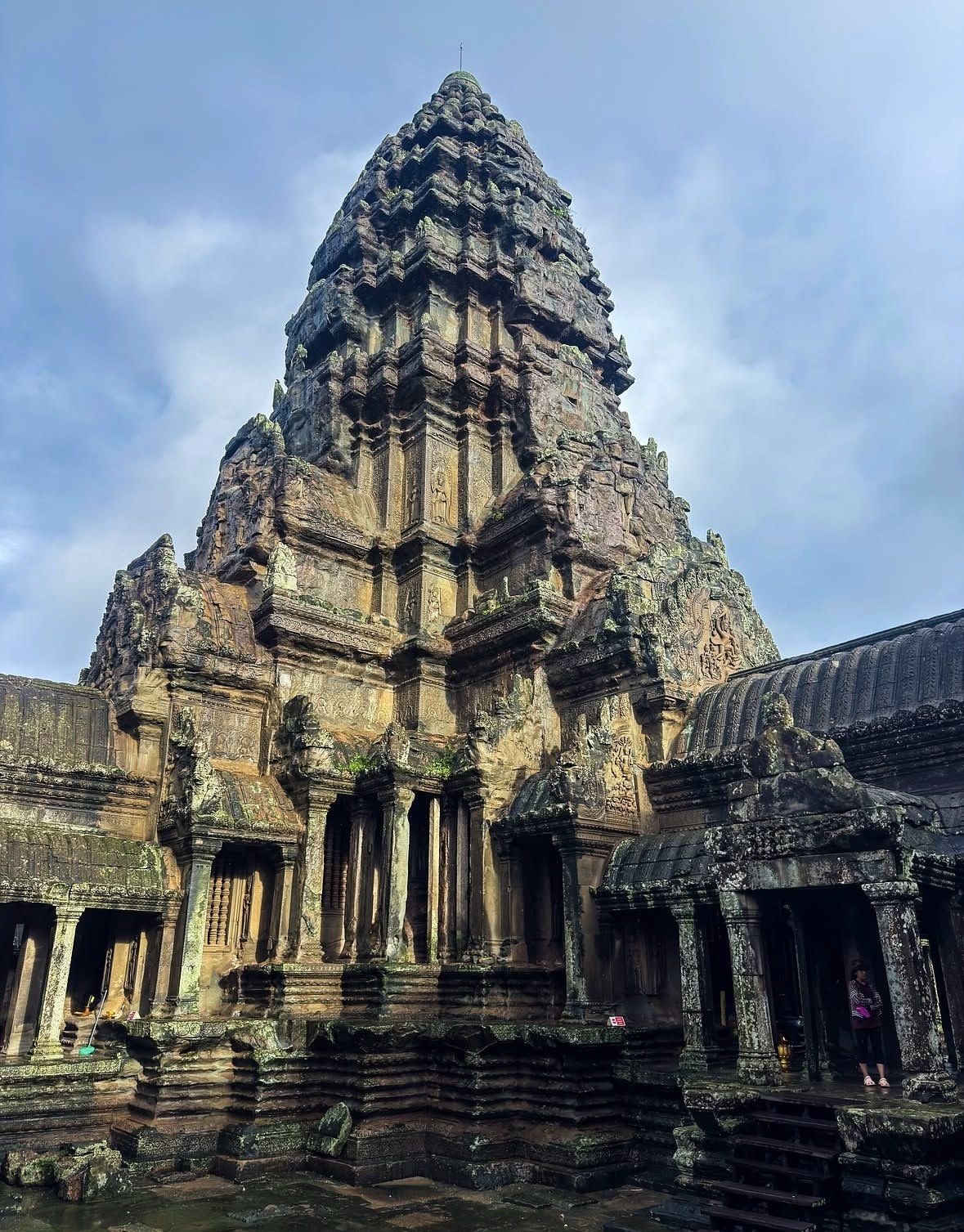
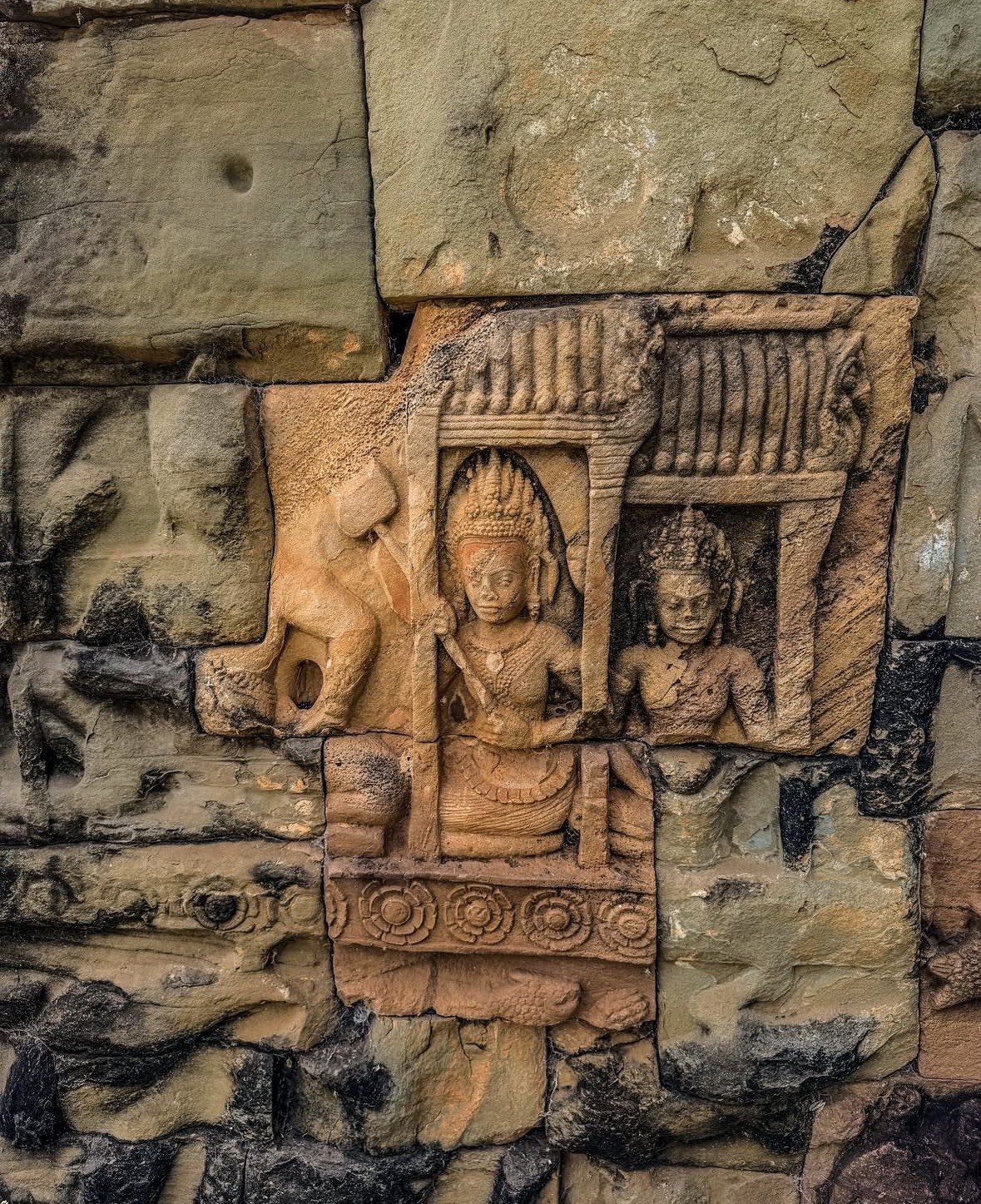
Stay inside Angkor Wat. Most of the causeway crowd leaves for breakfast within twenty minutes of the sun clearing the towers, and the galleries are at their best in that low, early light. The western gallery carries the Battle of Lanka and the Kurukshetra War, read anticlockwise from the north-west corner; the southern gallery holds the procession of Suryavarman II beside the panel of the 32 hells and 37 heavens; the Churning of the Sea of Milk runs along the eastern side.
Climbing to the Bakan is a second wait. The upper level starts admitting at about 6:40 AM, well after the temple itself, and the way up is the wooden stairway on the eastern side. Groups of 100 go up at a time and stay 15 to 30 minutes, dressed modestly, and on the four Buddhist holy days of each month the level is reserved for Cambodian visitors at worship, so plan the climb for roughly an hour after sunrise and accept that it may not happen.
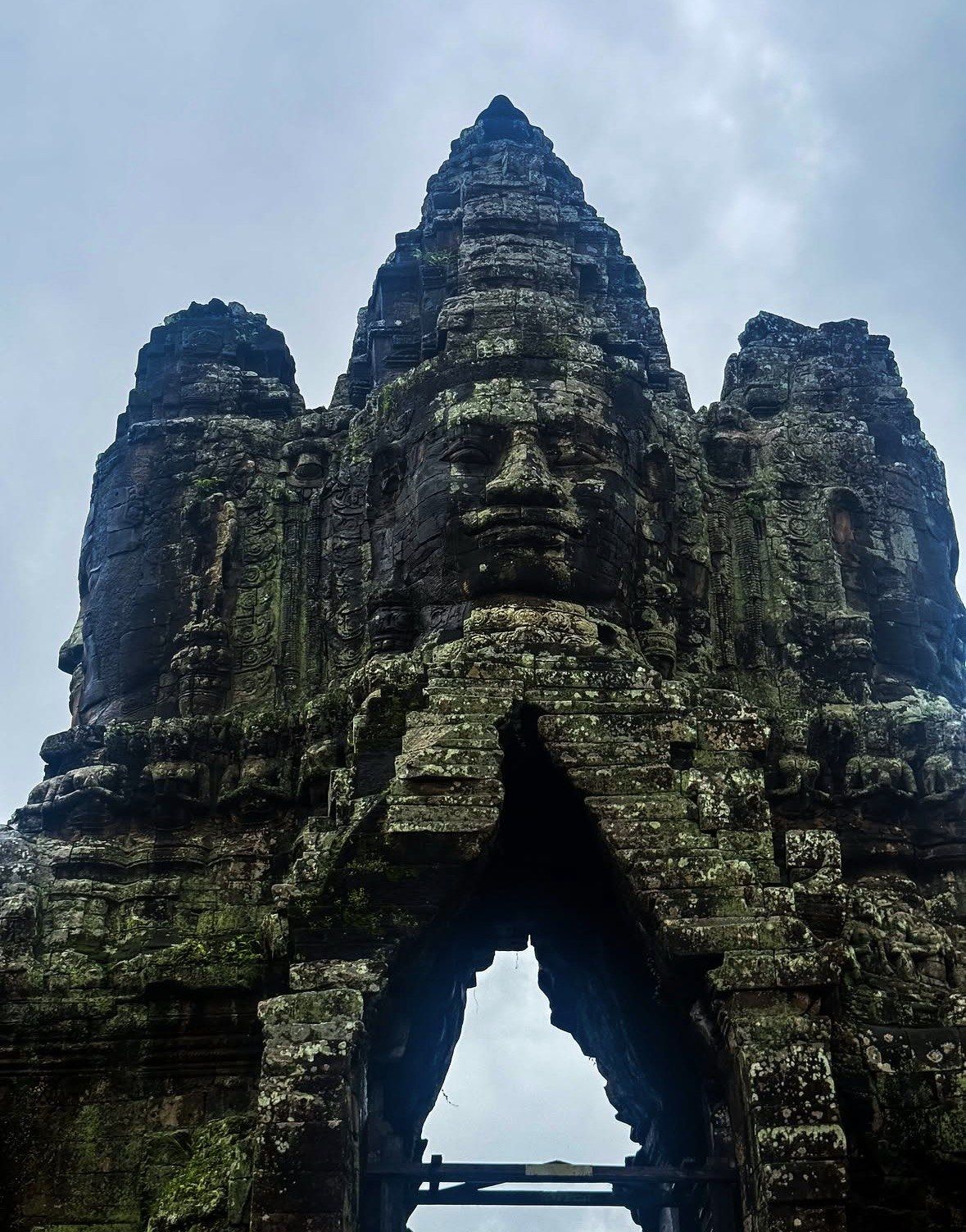
From there the morning sequences itself by the official hours. Angkor Thom's gates and walls can be walked at any time, but the Bayon and the Baphuon do not open until 7:30 AM, and so does Ta Prohm, 3 km north-east of Angkor Wat. Preah Khan opens at 7:00 AM and runs to 6:30 PM, which makes it a better late-afternoon stop than a mid-morning one. Keep Phnom Bakheng, 1.5 km from Angkor Wat, for dusk; it is listed to 7:00 PM, but plan to be down by the park's 6:30 PM closing.
- Until about 6:40 AM: the outer galleries and bas-reliefs while the light is low
- From about 6:40 AM: the Bakan by the eastern wooden stairway
- 7:30 AM onwards: inside Angkor Thom, the Bayon and the Baphuon open
- Mid-morning: Ta Prohm, 3 km north-east, also closed until 7:30 AM
- After 5:30 PM, when Angkor Wat shuts: Preah Khan stays open to 6:30 PM, Phnom Bakheng until the park's 6:30 PM closing
Which sunrise tour to choose
Commit to the early start, then pick the shape of the day that follows it. Each of these can put you on the causeway for the 5:00 AM opening; what differs is the pace, the transport and whether the park pass sits inside the price.
For a dawn at your own speed, with no one else's schedule deciding when you leave the galleries, take the private sunrise tour. If you would rather cover ground than stand still, the bike version runs nine hours and feeds you breakfast and lunch between temples. Serious cameras are better served by the photography tour, the only one here whose price already covers the one-day entrance fee of $37 per person. The shared sunrise or sunset tour is the cheapest way in and lets you swap dawn for late afternoon if the forecast turns.
| Tour | From | Duration | Shape of the morning | Angkor pass | Rating |
|---|
| Angkor Wat Sunrise Private Tour with Guide from Siem Reap | $60 | 8 hours | Private sunrise, private air-conditioned transport, cold towel and water | Not included | 5.0 ★ (3,558) |
|---|
| Angkor Sunrise Bike Tour / E-Bike or Tuk Tuk | $60 | 9 hours | Sunrise then the circuits by bike, e-bike or tuk tuk, with support vehicle, breakfast and lunch | Not included, $37 single-day entry | 5.0 ★ (638) |
|---|
| Angkor Wat Photography Tour | $105 | 8-10 hours | A full day built around the light, private superior air-conditioned transport, guide meets you at the ticket hall | 1-day entrance fee of $37 per person included | 5.0 ★ (2) |
|---|
| Angkor Wat Sunrise or Sunset Tour with Guide from Siem Reap | $18 | 8 hours | Dawn or late afternoon, your choice, air-conditioned vehicle, cold water and cold towel | Not included | 5.0 ★ (13,742) |
|---|
Questions people ask
What time do the gates open for the Angkor Wat sunrise?
5:00 AM, for the park and for Angkor Wat itself, which closes at 5:30 PM. Nothing opens before then, counters included. Since sunrise falls between about 05:39 and about 06:31 depending on the month, 5:00 AM at the gate always means some waiting in the dark.
Can I buy the pass at the gate before dawn?
Not before 5:00 AM, because that is when the counters open. The usual fix, per the official help centre, is to buy during the previous afternoon: anything purchased after 5:00 PM carries over to the next day. Online purchases arrive by email instantly, and a tour guide can also obtain the pass for you.
Is the equinox a better morning than the rest of the year?
On the two equinoxes, in spring and autumn, the sun comes up in line with the central tower as seen from the western causeway, and no other date gives you that alignment. In March that moment falls at about 06:08. Expect the central position in front of the northern pond to be the busiest ground in the park on those mornings.
What should I wear, and can I bring a tripod?
Shoulders and knees stay covered from the 5:00 AM gate until you leave. Revealing clothing is banned in sacred places under the visitor code of conduct, and foreign-office advice is blunt that religious sites, Angkor Wat included, can refuse you entry on those grounds, and being turned away at 5:00 AM wastes the whole early start. Tripods are discouraged inside the temples by the same code.
Would sunset be a better choice than sunrise?
Sunset works, but it happens somewhere else. The hill people use is Phnom Bakheng, roughly 1.5 km along from Angkor Wat, listed to 7:00 PM, with a summit widely reported to be limited to 300 visitors at a time. Evening light goes at about 18:34 in June, about 18:15 at the March equinox and about 17:43 in December, and the park's 6:30 PM closing caps how long you can stay out.
Read also